What Is an Industrial Bin Used For?
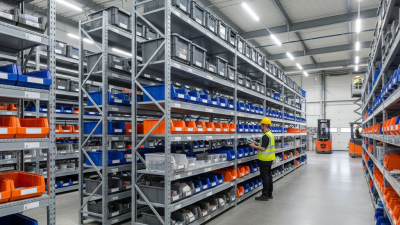
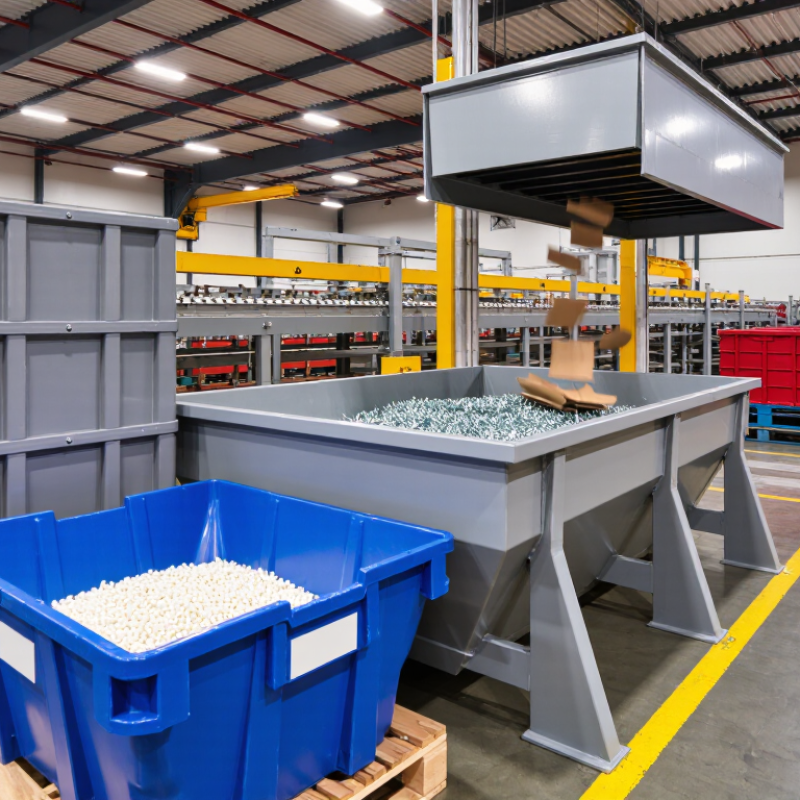
What Is an Industrial Bin Used For? The answer extends beyond simple waste collection. Industrial bins help factories, warehouses, workshops, and distribution centers store, move, sort, and protect materials. A durable bin may hold plastic pellets, metal fasteners, packaging scraps, returned products, or food-processing ingredients. Some models sit beneath a conveyor, while others travel by forklift across a busy plant floor.
Industry data supports this practical role. The U.S. Environmental Protection Agency’s 2023 Facts and Figures report shows the continuing scale of municipal material generation and recovery in the United States. This pressure encourages businesses to separate recyclable, reusable, and general waste streams more carefully. MHI’s 2024 Industry Report also identifies efficiency, labor availability, and supply-chain visibility as major operational concerns. Industrial bins can support these goals by creating fixed storage locations and reducing unnecessary handling. Small improvements matter.
The correct bin depends on the material, load weight, temperature, cleaning needs, and movement method. Steel bins suit heavy components and rough environments. Plastic bins resist corrosion and often support repeated washing. Stackable containers save floor space, but poor stacking can create instability. That detail deserves attention. A bin is not automatically safe because it looks strong. Operators should check rated capacity, forklift access, lid design, and workplace procedures. Reports provide useful direction, yet every facility has different traffic patterns and risks. A careful site assessment remains essential. Mistakes happen. Good bin selection reduces them without pretending to eliminate every operational problem.
Definition and Core Functions of an Industrial Bin
What Is an Industrial Bin Used For?
Definition and Core Functions of an Industrial Bin
An industrial bin is a durable container designed for demanding workplaces. It stores, collects, separates, and moves materials during daily operations. Common contents include parts, packaging, recyclable materials, production scraps, and general workplace waste. Unlike household containers, industrial bins often withstand impact, repeated handling, moisture, and heavy loads.
Their core function is controlled material management. A bin keeps items contained and reduces clutter around workstations, warehouses, workshops, and loading areas. Different sizes support different tasks. A small open bin may hold fasteners beside an assembly table. A larger wheeled bin can carry bulky packaging across a facility. Lids help limit dust, spills, and unwanted contact, while handles or lifting points improve movement.
Choosing a suitable bin requires practical judgment. Check its load capacity, dimensions, opening, material compatibility, and cleaning needs. A rigid polymer bin may resist moisture and corrosion. A steel bin may suit heavier components, but it can add handling weight.
The floor surface also matters, especially when wheels are used. Poor placement can block aisles or create awkward lifting.
No bin is perfect. A label may fade, a lid may warp, or an oversized container may encourage overfilling. I have found that simple inspections prevent many problems. Look for cracks, sharp edges, unstable wheels, and damaged handles. Clear identification also helps workers place materials correctly, although labels alone cannot replace good training.
Types, Materials, and Design Features of Industrial Bins
Industrial bins organize, store, and move materials in factories, warehouses, workshops, and distribution areas. Their design depends on the load, handling method, and working environment. Stackable bins suit small parts and packaged goods. Hopper bins help operators release bulk materials through a lower opening. Wire mesh bins improve visibility and airflow. Mobile tilt bins support frequent movement around production lines.
Common materials include galvanized steel, stainless steel, high-density polyethylene, and polypropylene. Steel handles heavy loads and repeated impacts, but it adds weight and may corrode if its coating is damaged. Stainless steel resists moisture and supports strict cleaning routines. Plastic bins are lighter and often resist chemicals, though extreme temperatures can make some plastics brittle. Material compatibility matters. A bin that survives outdoors may still fail near heat or solvents.
Useful design features include reinforced corners, smooth internal walls, forklift pockets, lifting points, secure lids, and drain openings. Casters can reduce handling effort, but poorly selected wheels may roll badly on uneven floors. Check the rated capacity, stacking height, and center of gravity before loading. Clear labels improve traceability, especially when bins hold similar components. Ergonomic handles also reduce awkward lifting. No bin is perfect. In practice, teams sometimes choose a durable container that is too heavy for daily manual handling, creating an avoidable safety problem.
What Is an Industrial Bin Used For?
Industrial bins are used to store, transport, sort, and protect components, raw materials, waste, and finished goods. Capacity varies by bin type, material, and handling requirements.
The chart shows representative nominal capacity ranges commonly found in industrial applications. Actual capacities differ by manufacturer, wall design, load rating, and intended use.
Industries and Workflows That Use Industrial Bins
What Is an Industrial Bin Used For?
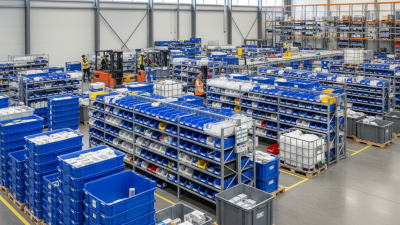
Industrial bins support organized material handling across many industries and daily workflows. In manufacturing plants, they hold fasteners, molded parts, tools, and work-in-progress components near production lines. Workers can see the contents quickly, reduce walking time, and refill stations with fewer interruptions.
Warehouses use industrial bins for receiving, picking, returns, and small-part storage. A receiving team may place unpacked components into labeled bins before quality checks. During order picking, color-coded containers help separate items by route or work order. Construction and maintenance crews also use rugged bins for fittings, cables, repair parts, and job-site supplies. However, the perfect bin rarely exists. A container that suits a clean workshop may fail in a dusty or wet environment. That assumption can be costly.
Tips: Match the bin to its load, dimensions, and handling method. Check weight ratings before stacking. Use clear labels with part numbers and replenishment levels. Keep heavy contents between knee and waist height when possible. Inspect cracked walls, damaged handles, and unstable stacks. Small details matter. In real operations, teams sometimes choose larger bins for convenience, then create wasted space and difficult lifting. Trial a few sizes first, record handling time, and adjust the layout after observing actual use.
How to Select the Right Industrial Bin
What Is an Industrial Bin Used For?
How to Select the Right Industrial Bin
Industrial bins hold production scrap, packaging, recyclables, and general workplace waste. Their purpose extends beyond storage. A suitable bin controls spills, shortens collection time, and keeps walkways clearer. In 2022, Eurostat reported 513 kilograms of municipal waste per person across the European Union. That figure is not an industrial benchmark, but it shows how quickly waste volumes accumulate.
Start with the material, not the appearance. A bin for metal offcuts needs stronger walls than one for cardboard. Wet waste may require a sealed body and corrosion-resistant surfaces. Check the expected load, then add a realistic safety margin. Overlooking this step is common. I have seen teams choose capacity by volume alone, although dense scrap can overload wheels, floors, or lifting points.
Consider the working route. Narrow aisles may favor a compact, mobile bin, while a loading dock may need a larger container with forklift access. Measure doorways, turning spaces, and storage height before ordering. OSHA guidance on materials handling stresses stable loads, clear travel paths, and suitable handling equipment. Those details affect daily safety.
The U.S. EPA’s 2018 Facts and Figures report recorded 292.4 million tons of municipal solid waste in the United States. Industrial waste streams differ, but the scale reinforces one point: collection systems must match real operating conditions. Review fill frequency, cleaning needs, noise, and worker access. A beautiful bin can still be the wrong bin. Test one unit for a week before wider deployment.