
585.204.6770
sale@sanblueplastics.com
Your Source for Trays!
Global buyers are paying closer attention to polyimide tape as electronics, electric vehicles, aerospace systems, and battery manufacturing expand. The tape’s amber film, clean edges, and resistance to heat make it useful for masking, insulation, coil wrapping, and solder protection.
Grand View Research’s 2024 polyimide films analysis identifies electronics and advanced industrial applications as major growth drivers. MarketsandMarkets also reports increasing demand for polyimide materials in flexible circuits, automotive electronics, and aerospace components. However, these reports often combine films, coatings, and tapes. That limitation matters. Market figures should not be treated as perfectly comparable.
Technical performance remains the real purchasing test. A reliable polyimide tape should maintain adhesion across temperature cycling, resist chemical exposure, and remove without excessive residue. Width tolerance matters, too. A narrow edge can affect automated assembly.
Dr. H. D. Stenzenberger, a recognized polyimide materials researcher, described polyimides as offering “excellent thermal stability and chemical resistance.” That statement explains the material’s appeal, but it does not guarantee every tape performs equally. Adhesive chemistry, backing thickness, surface preparation, and storage conditions can change results.
This guide compares leading polyimide tape manufacturers for global buyers. It considers product consistency, technical documentation, customization, certifications, production capacity, and customer support. Supplier claims still require verification. Request samples. Test them on the actual substrate. A tape that survives a laboratory test may behave differently beside a hot battery tab or a tightly wound copper coil.
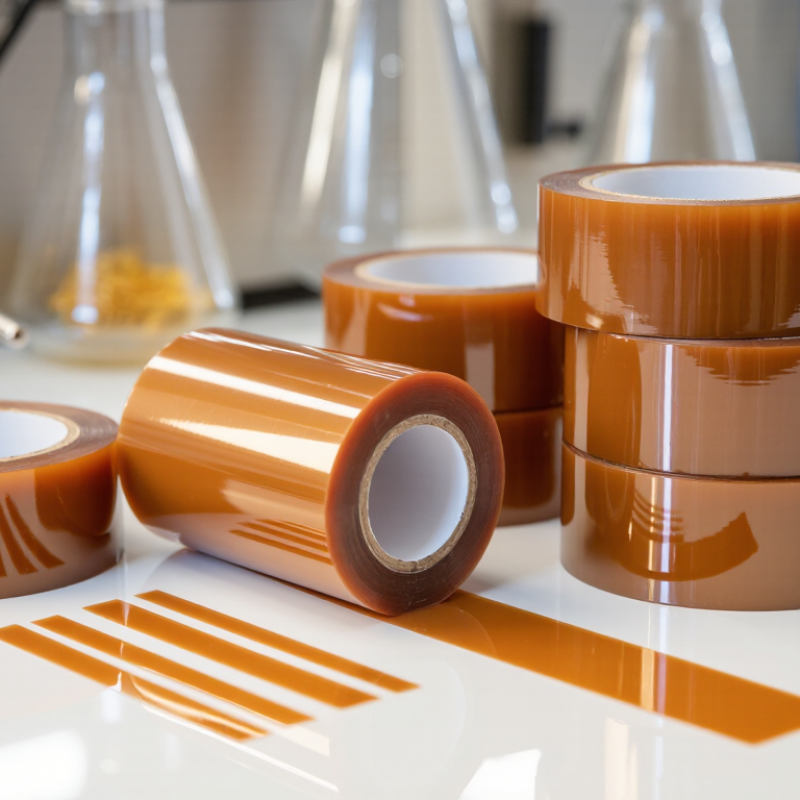
Polyimide tape is a thin electrical and thermal insulation material. It usually combines polyimide film with a silicone adhesive layer. The amber-colored tape feels light, but it performs under demanding conditions. Many grades tolerate high temperatures, voltage exposure, soldering, and repeated handling. Its value comes from stable insulation, clean removal, and resistance to chemicals. However, no tape suits every assembly.
In practical sourcing, engineers use polyimide tape to protect circuit boards during soldering and coating. It can also bundle wires, mask contact areas, and shield delicate surfaces. A dependable product should maintain adhesion without leaving heavy residue. Thickness matters too. Thin tape fits tight spaces, while thicker tape offers stronger mechanical protection. Buyers should request technical data, test reports, and sample rolls before placing large orders. Small differences can affect production results. I have seen teams focus on temperature ratings and overlook adhesive compatibility. That mistake can become expensive.
Tips: Check the actual working temperature, not only the short-term peak. Test the tape on your surface for at least 24 hours. Inspect edge lifting after heat exposure. Confirm roll width, length, core size, and storage conditions. Keep unused rolls sealed and away from moisture and direct sunlight. Ask manufacturers about batch consistency and quality inspection methods. A sample may perform well, yet full production can reveal variation. Allow time for a second evaluation.
Polyimide tape matters because it maintains electrical insulation and dimensional stability at high temperatures. The chart compares representative maximum continuous-use temperatures for commonly used insulation tape materials. Actual performance varies by film thickness, adhesive system, and product grade.
Reference values are representative engineering benchmarks: polyimide and PTFE up to approximately 260°C, polyester up to approximately 150°C, and PVC up to approximately 105°C.
Global buyers should evaluate polyimide tape manufacturers through measurable evidence, not attractive catalogs. A 2024 MarketsandMarkets report estimates steady growth in the polyimide film market, driven by electronics, automotive, and aerospace demand. This growth increases supplier competition, but quality can vary. Request test data for dielectric strength, temperature resistance, adhesion, thickness tolerance, and thermal shrinkage. A neat datasheet is not enough.
Production control matters. Ask whether the manufacturer uses calibrated coating equipment, controlled curing temperatures, and documented batch inspection. Verify ISO 9001 certification, traceability records, and sample retention policies. For high-temperature assembly, compare performance after repeated thermal cycling, not only after one laboratory test. IEC and ASTM-based methods can improve comparison, although suppliers may interpret testing conditions differently. That weakness needs attention.
Supply reliability also deserves practical review. The 2023 Grand View Research outlook places advanced electronic materials among continuing growth areas, increasing pressure on lead times and raw-material availability. Evaluate monthly capacity, export documentation, packaging protection, and contingency planning. Ask for three recent batch records and independent laboratory results. Some suppliers may provide excellent samples but inconsistent production lots. That risk is easy to overlook. Visit the facility when volumes justify it, and inspect clean storage, roll edges, splice control, and labeling directly. (Approx. 205 words)
Top Polyimide Tape Manufacturers for Global Buyers
Leading polyimide tape manufacturers compete through heat resistance, dimensional stability, and adhesive control. Recent MarketsandMarkets research values the global polyimide film market at over USD 1 billion, with steady growth expected through 2028. Tape producers convert this material into solutions for circuit protection, coil insulation, solder masking, and battery assembly. Strong suppliers usually offer silicone or acrylic adhesives, controlled thickness, low residue, and precise slitting. These details matter on a narrow circuit edge.
Product strength is not only about temperature ratings. A reliable manufacturer should provide batch traceability, technical data sheets, and test results for dielectric strength, peel adhesion, elongation, and thermal aging. Grand View Research reports continuing demand for high-performance polymer films in electronics and aerospace applications. That trend supports wider tape use, but market forecasts vary between reports. Buyers should question unusually high claims. Real factory experience often reveals small limits, such as adhesive transfer after repeated heating or poor unwinding at high speed.
Tips: Request samples in the exact thickness and width required. Test them on your actual substrate, not only on laboratory steel panels. Confirm storage life, roll hardness, liner options, and export packaging. ISO-based quality systems can improve consistency, but certification alone is not proof of process capability. Ask for recent inspection records. Check the details.
| Anonymous Manufacturer Profile | Primary Manufacturing Strength | Typical Product Formats | Common Thickness Range | Temperature Capability | Adhesive Options | Electrical Performance | Typical Applications | Global Buyer Considerations |
|---|---|---|---|---|---|---|---|---|
| Profile 01 | High-temperature electrical insulation tape with stable dielectric properties | Single-sided rolls, die-cut shapes, custom slit widths | Approximately 25–125 µm film; finished tape varies by adhesive | Commonly rated around 155–260°C, depending on construction and test method | Silicone or acrylic; removable and permanent grades may be available | Typical dielectric strength: approximately 4–8 kV, subject to thickness and test conditions | Coil insulation, transformer components, motor winding, PCB masking | Verify dielectric strength, thermal aging, adhesive residue, and lot traceability before volume purchase |
| Profile 02 | Clean-removal masking tape for soldering, powder coating, and high-temperature processing | Standard rolls, narrow slits, punched and laser-cut parts | Approximately 25–80 µm film; total thickness depends on adhesive coating | Short-term exposure commonly reaches 200–260°C; actual limits depend on dwell time | Low-residue silicone systems are frequently selected for clean removal | Electrical insulation is available, but masking products should be selected by tested grade | Wave soldering, reflow masking, anodizing, powder coating, 3D printing | Request residue testing on the actual substrate and confirmation of temperature dwell time |
| Profile 03 | Flexible and conformable tape for tight bends and uneven surfaces | Thin rolls, narrow-width strips, kiss-cut parts, carrier-backed tape | Approximately 12.5–50 µm film for thin, flexible constructions | Commonly selected for continuous service near 130–180°C, grade dependent | Acrylic or silicone adhesive, including conformable and high-tack grades | Thin-film dielectric performance varies significantly with film thickness and adhesive | Flexible circuits, battery tabs, sensors, wire harnesses, compact electronics | Evaluate elongation, conformability, peel adhesion, and die-cut edge quality |
| Profile 04 | Heavy-duty insulation and mechanical protection for demanding industrial assemblies | Thicker rolls, reinforced constructions, custom laminations | Approximately 50–125 µm film; laminated products may be thicker | Typical high-temperature ranges are approximately 180–260°C | High-tack silicone, acrylic, and specialty adhesive systems | Designed for insulation, abrasion resistance, and dimensional stability | Motors, generators, batteries, aerospace components, industrial cable protection | Confirm tensile strength, tear resistance, thermal class, and compatibility with varnishes or resins |
| Profile 05 | Custom converting, precision slitting, and high-volume OEM supply | Master rolls, custom-width rolls, die-cut components, spools, and kits | Common commercial constructions range from approximately 12.5–125 µm film | Available products may range from standard industrial grades to 260°C-class materials | Silicone, acrylic, rubber-based, removable, permanent, and transfer adhesive options | Performance is specified by the selected construction rather than by converting capability alone | Automotive, electronics, renewable energy, aerospace, appliances, and general industry | Compare minimum order quantity, tolerance control, packaging, export documentation, and sampling policy |
| Profile 06 | Compliance-focused production for regulated electronics and electrical applications | Standard rolls, traceable lots, custom slit rolls, and technical sample kits | Approximately 25–125 µm film, depending on the required insulation level | Product ratings commonly span approximately 130–260°C | Adhesive selection may include low-halogen, low-VOC, flame-retardant, or low-residue options | Some grades are tested to recognized flammability or electrical insulation requirements | Automotive electronics, power modules, industrial controls, and safety-critical assemblies | Request current technical data sheets, safety data sheets, compliance declarations, and audit documentation |
Note: The specifications shown are representative ranges for commercially available polyimide tape constructions. Exact performance depends on the polyimide film, adhesive chemistry, thickness, test method, exposure time, and application conditions.
When comparing polyimide tape manufacturers, quality should be measured, not assumed. Request samples from the same production batch as your intended order. Check thickness tolerance, adhesive uniformity, tensile strength, elongation, and dielectric breakdown. A reliable supplier should provide test reports and a clear certificate of analysis for each batch. Temperature ratings also need practical verification, especially for motor windings, transformers, and circuit-board masking.
Certifications can support trust, but their scope matters. Confirm whether ISO 9001 covers the manufacturing site, not only the corporate office. Review applicable UL recognition, RoHS, and REACH documentation with current revision dates. Ask whether testing covers the tape, adhesive, and release liner. I have seen attractive certificates that did not match the purchased grade. That mistake is expensive.
Pricing should include more than the roll price. Compare minimum order quantities, slitting fees, packaging, freight, duties, and payment terms. A lower quote may hide inconsistent width or excessive waste. Delivery evaluations should include stock levels, production capacity, lead-time history, and emergency order policies. Request a written schedule with shipping terms and carton details. Traceable labels help resolve claims quickly. Some buyers focus heavily on price, then regret ignoring adhesive aging data. That is a reasonable concern, but not every application needs the highest specification. Test the actual use case before paying for unnecessary performance.
Choosing the right polyimide tape supplier starts with the application, not the catalogue. A supplier should explain temperature exposure, voltage, surface energy, and removal conditions. For coil insulation, the tape may need stable dielectric strength and clean edges. For masking, adhesion balance matters more than maximum temperature.
The 2024 MarketsandMarkets report on polyimide films estimates steady market growth through 2029, driven by electronics, aerospace, and electric mobility. However, film data does not automatically prove tape performance. Ask suppliers for test results under ASTM D1000 methods, including peel adhesion, tensile strength, and elongation. Request samples from the same production lot. Small differences in adhesive coating can change results.
A reliable supplier should provide technical data sheets, safety documentation, lot traceability, and aging records. Check whether values were measured at room temperature or after thermal cycling. That detail is often overlooked. It matters.
In production trials, test the tape on the actual substrate, with the real pressure and dwell time. Copper foil, powder-coated metal, and silicone surfaces behave differently. Do not select only by price. Yet, premium pricing alone proves little. I would also question unusually perfect data, especially when no test conditions are listed. A supplier may be experienced, but your process can still expose weaknesses. Trial evidence should decide.