
585.204.6770
sale@sanblueplastics.com
Your Source for Trays!
Choosing a reliable Jump Box supplier is not simply a matter of comparing prices. Global buyers must examine starting current, battery chemistry, safety protection, certifications, warranty terms, and after-sales support. A compact unit may look powerful on a product page, yet perform poorly in cold weather or after repeated use. Real testing matters.
Mark Scheetz, an automotive power-equipment specialist at Clore Automotive, offers a practical reminder: “A jump starter is only as good as its battery and cables.” That principle remains highly relevant. Strong clamps, flexible cables, thermal protection, and accurate capacity claims can determine whether a unit works beside a roadside vehicle or stays unused in a warehouse.
This guide introduces ten Jump Box suppliers serving international buyers. It considers manufacturing experience, product consistency, export readiness, technical documentation, and customer feedback. It also looks at less visible details, including packaging quality, replacement parts, charging time, and support response. These factors can affect ownership costs significantly.
No ranking is perfect.
Supplier capabilities change. Regional service quality can differ. Some brands publish impressive peak-current figures but provide limited independent test data. That deserves caution. Buyers should verify specifications, request samples, and confirm compliance requirements before placing large orders. A careful evaluation may take longer, but it reduces costly surprises.
The suppliers below were selected for their market presence, product range, and suitability for professional and consumer applications. The list is a starting point, not a final purchasing decision. Practical inspection still matters.
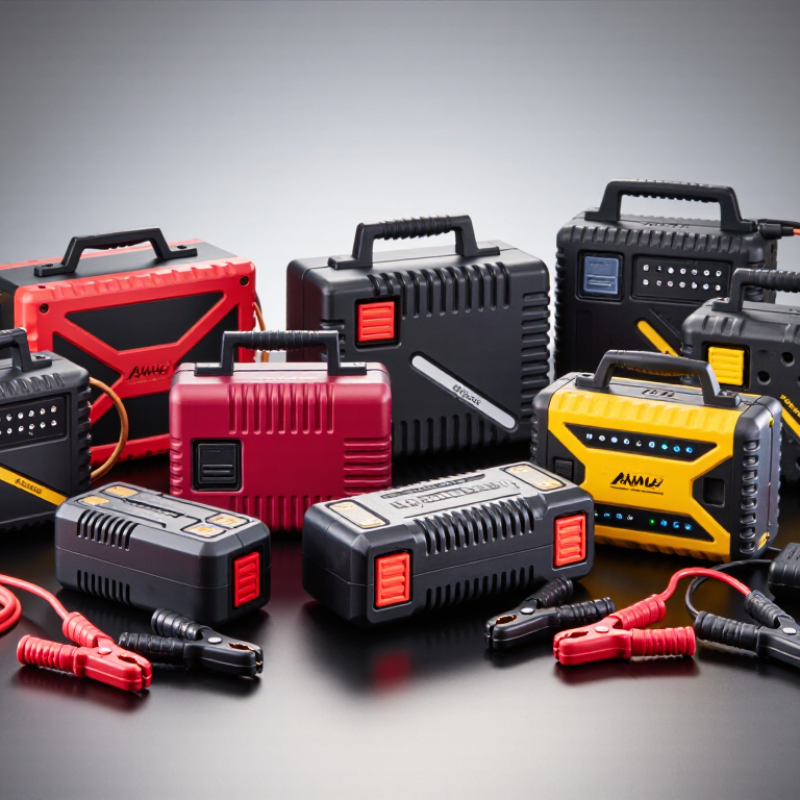
Top 10 Jump Box Suppliers for Global Buyers
What Is a Jump Box and Why Global Buyers Need One
A jump box is a portable power unit that starts a vehicle when its battery cannot deliver enough current. It usually contains a rechargeable lithium battery, booster cables, clamps, and safety controls. The need is practical, not theoretical. S&P Global Mobility reported that the average age of vehicles in the United States reached 12.6 years in 2024, while more than 286 million light vehicles remained in operation. Older vehicles often bring aging batteries, weak connections, and unexpected roadside failures.
Global buyers may need jump boxes for workshops, roadside services, fleets, dealerships, and household emergency kits. A reliable model should state starting current, battery capacity, operating temperature, recharge time, clamp quality, and protection against reverse polarity. Do not trust peak current alone. It can look impressive on a product sheet but may not reflect real starting performance in cold weather. A controlled test matters more.
Battery transport also requires careful sourcing. For lithium-powered units, buyers should request UN 38.3 transport test evidence and applicable regional safety documentation. Packaging must protect terminals from short circuits. Small details matter. One weak clamp can ruin the user experience. Suppliers should provide inspection records, traceable batch numbers, clear manuals, and responsive warranty support. Market reports can estimate demand, but field feedback reveals defects more honestly. Specifications are useful, yet they are never the whole product.
Top 10 Jump Box Suppliers for Global Buyers
Key Criteria for Evaluating Jump Box Suppliers Worldwide
Choosing a jump box supplier requires more than comparing prices. Buyers should inspect battery capacity, peak current, clamp quality, charging speed, and cold-weather performance. A reliable unit should start a vehicle repeatedly without overheating. Ask for laboratory test reports, not only catalog claims. Samples can reveal weak cables, loose switches, or confusing indicators.
Compliance is equally important for international purchasing. Check battery transport documents, UN 38.3 testing, and applicable electrical safety reports. EMC, RoHS, CE, or other market requirements may also apply. Requirements differ by destination. A supplier familiar with customs paperwork can prevent costly delays. Verify carton strength, pallet design, and labeling before mass production. One damaged shipment can erase a small unit-price advantage.
Supplier capability needs closer examination. Review production records, quality-control procedures, warranty terms, and spare-parts support. Request a factory video or independent audit when travel is impractical. Ask how failed units are traced and replaced. Fast replies matter, but technical answers matter more. No supplier is perfect. I would question any company promising zero defects or unlimited performance. A stronger partner admits limitations and explains corrective actions. Start with a paid sample order, then test it at low temperature, under repeated loads, and after several charging cycles. Keep written results for comparison.
| Rank | Supplier Profile | Primary Export Region | Typical Product Focus | Indicative MOQ | Typical Production Lead Time | Common Compliance Evidence | Customization Capability | Buyer Verification Priority |
|---|---|---|---|---|---|---|---|---|
| 1 | Profile A | East Asia | Portable lithium jump starters and emergency power packs | 100–500 units | 25–45 days | UN 38.3 test summary, MSDS/SDS, CE or equivalent market documentation | High: housing color, cable set, packaging and private label | Battery-cell traceability and transport documentation |
| 2 | Profile B | South Asia | 12 V automotive jump boxes and lead-acid support units | 50–300 units | 30–50 days | Battery safety sheet, electrical test report and factory quality records | Medium: labels, cables, carton artwork and accessories | Cranking-current test method and warranty process |
| 3 | Profile C | Southeast Asia | High-capacity lithium jump starters for passenger vehicles | 200–1,000 units | 35–55 days | UN 38.3, IEC-related test documentation and battery transport records | High: display, flashlight, USB outputs and enclosure design | Actual peak-current measurement under defined conditions |
| 4 | Profile D | European Union | Professional roadside-assistance power units | 20–100 units | 20–40 days | Declaration of conformity, EMC documentation and RoHS-related records | Medium: connectors, charging systems and service packaging | Local-market regulatory file and after-sales support coverage |
| 5 | Profile E | North America | Heavy-duty jump boxes for workshops and fleet operators | 25–150 units | 30–60 days | Electrical safety test report, SDS and documented quality inspection | Low to medium: branding and accessory configuration | Continuous-duty performance, clamp quality and service parts |
| 6 | Profile F | Oceania | Compact consumer jump starters with USB charging | 100–500 units | 25–45 days | UN 38.3, SDS, EMC evidence and product labeling files | High: retail packaging, color, cable length and user guide | Ingress protection claims and USB output verification |
| 7 | Profile G | Middle East | Heat-resistant automotive emergency power equipment | 50–250 units | 30–50 days | Temperature test results, SDS and battery transport documentation | Medium: thermal design, packaging and cable configuration | High-temperature storage and operating test conditions |
| 8 | Profile H | Latin America | Value-oriented jump boxes for aftermarket distribution | 100–1,000 units | 35–60 days | Basic electrical test report, SDS and packaging specifications | High: price-focused packaging and accessory options | Cost breakdown, defect-rate controls and replacement policy |
| 9 | Profile I | Africa | Multi-purpose jump boxes with compressor and work light | 50–300 units | 30–55 days | Battery safety documents, electrical test records and user instructions | Medium: multifunction modules and external accessories | Compressor duty cycle, lighting output and field repairability |
| 10 | Profile J | Eastern Europe | Private-label jump starters for online and retail channels | 100–500 units | 25–50 days | UN 38.3, SDS, EMC records and market-specific labeling file | High: artwork, manuals, packaging and bundled accessories | Sample consistency, barcode compliance and fulfillment capability |
Global buyers are examining jump box suppliers more carefully as roadside power needs grow. The International Energy Agency reported that global electric car sales exceeded 17 million in 2024. However, most portable jump boxes still serve 12-volt vehicles, not high-voltage traction batteries. This distinction matters during procurement.
A reliable supplier should provide measured starting current, not only impressive peak figures. Request cold-cranking performance, cycle-life results, charging time, and operating temperatures. Grand View Research identifies lithium-ion batteries as a major growth area in portable power equipment, driven by higher energy density and lower weight. A practical unit may fit inside a glove compartment, include insulated clamps, and remain usable after several months in storage. Ask for safety testing against recognized portable-power standards, including protection from reverse polarity, short circuits, and overheating.
Documentation separates experienced suppliers from resellers. Verify factory audit records, batch traceability, cell specifications, warranty terms, and replacement-part availability. Test samples at 0°C and 40°C, not only in a showroom. Some suppliers publish peak amperage without explaining test conditions. That is a warning sign. Yet buyers can also over-specify capacity and increase freight costs unnecessarily. I have seen procurement teams overlook cable flexibility, even though stiff cables fail quickly in cold weather. A careful supplier comparison should weigh verified performance, service responsiveness, certification scope, and total landed cost across each destination market.
This anonymized benchmark compares ten supplier profiles by their highest commonly listed jump-starter peak-current rating. Peak current is a key specification for buyers evaluating starting capability across passenger vehicles, trucks, and commercial equipment.
Top 10 Jump Box Suppliers for Global Buyers
How to Compare Products, Certifications, Prices, and Services
Choosing among the top ten jump box suppliers requires more than comparing advertised peak current. Check battery chemistry, tested capacity, clamp quality, cable length, and protection against reverse polarity. A reliable unit should start vehicles in realistic temperatures, not only in laboratory conditions. Ask for test records showing cycle life, charging time, standby performance, and overload protection. Product photographs are useful, but they cannot prove durability.
Certifications must match your destination market. Request current documents for relevant electrical safety, electromagnetic compatibility, transport, and material requirements. Depending on the country, buyers may need reports such as UN38.3, IEC testing, CE, FCC, or RoHS evidence. Verify that the certificate identifies the exact model and factory. Generic documents deserve caution. I have seen suppliers present expired reports or files covering a different battery pack. That mistake can delay customs clearance and damage trust.
Tips: Compare landed cost, not unit price. Include samples, tooling, packaging, freight, taxes, inspection, and warranty replacements. Ask about minimum order quantities and production lead times. A supplier offering a very low price may use thinner cables or weaker clamps. Service matters after delivery: measure response time, spare-part availability, multilingual manuals, and clear fault-handling procedures. Request one sample before a large order. It may reveal awkward buttons, poor labels, or a charger that overheats. Specifications can look perfect. Real use may disagree.
Choosing among the top 10 jump box suppliers requires more than comparing prices. Grand View Research reports that portable power equipment demand is expanding steadily, driven by vehicle ownership and emergency-use applications. This growth attracts inexperienced suppliers. Request factory profiles, production photographs, and recent third-party audit records. Ask for battery capacity tests, cycle-life results, and operating temperatures. Numbers matter.
Check compliance documents before requesting a large quotation. Battery packs should include UN 38.3 transport testing and relevant IEC safety documentation. The International Energy Agency reported that global electric car sales exceeded 17 million in 2024, increasing demand for reliable vehicle-support equipment. However, a jump box designed for one vehicle class may fail on another. Test samples on cold engines, thick cables, and repeated starts. A bright display proves little.
Use a weighted supplier scorecard. Give quality 35 percent, verified safety 25 percent, delivery reliability 20 percent, and service 20 percent. Compare warranty terms, replacement-part access, packaging strength, and response times. Request a sample order before signing a yearly contract. Inspect the clamps, switch, charging port, and printed instructions by hand. Small defects become expensive at scale. No scorecard is perfect. Forecasts can change, and supplier promises may sound stronger than factory evidence. Keep written records, confirm every specification, and review performance after the first shipment.