Top 10 Types of Auto Pipe Welding Machines for Buyers
The Auto Pipe Welding Machine market is expanding with industrial automation, energy infrastructure, and tighter quality requirements. Recent analysis from MarketsandMarkets identifies automation, productivity, and repeatable weld quality as major forces shaping the global welding equipment sector. Reports from Grand View Research also describe steady demand across construction, oil and gas, shipbuilding, and manufacturing. These trends make machine selection more complex than comparing price and welding speed.
This guide examines ten major types of Auto Pipe Welding Machine, including orbital, TIG, MIG, submerged arc, and narrow-gap systems. Each type serves different pipe diameters, wall thicknesses, materials, and production volumes. A compact orbital machine may suit stainless-steel process piping, while a heavy-duty column-and-boom system may handle large carbon-steel joints. Small details matter, such as torch access, wire feeding stability, cooling capacity, and fit-up tolerance.
Industry standards provide a reliable buying foundation. ISO 3834 emphasizes quality requirements for fusion welding, while ASME Section IX supports procedure and welder qualification practices. Buyers should also review applicable project specifications, inspection methods, and local safety requirements. No machine wins every shop. That assumption can fail.
In practical evaluations, operators should test actual pipe samples before purchasing. Examine arc stability, bead appearance, heat input control, data logging, and maintenance access. Manufacturer claims can look impressive, yet real production conditions often expose limitations. This overview offers a professional starting point, but final decisions should reflect verified trials, lifecycle costs, service support, and documented performance.
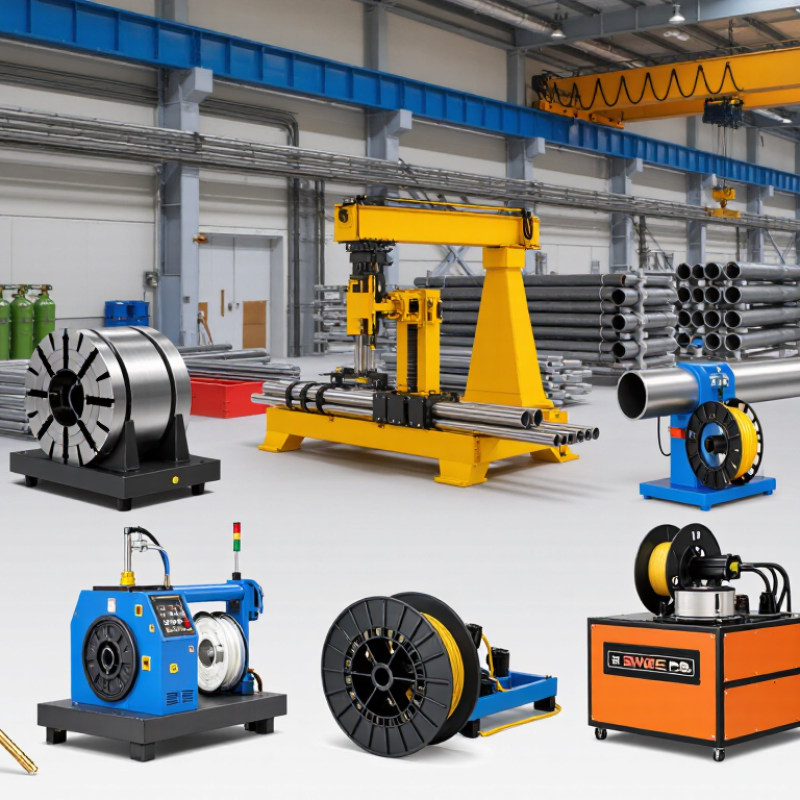
Automatic Pipe Welding Machine Categories and Core Working Principles
Top 10 Types of Auto Pipe Welding Machines for Buyers
Automatic Pipe Welding Machine Categories and Core Working Principles
Automatic pipe welding machines usually fall into ten categories: orbital GTAW, GMAW, FCAW, SAW, plasma, laser, friction, robotic-arm, internal-cladding, and multi-process systems. Orbital GTAW rotates the torch around a fixed pipe, while controlling current, travel speed, and shielding gas. GMAW and FCAW feed wire continuously, making them faster for structural and large-diameter work. SAW buries the arc under granular flux. Plasma and laser systems concentrate heat into narrower zones. Friction welding joins surfaces through pressure and motion, not a conventional arc.
The International Federation of Robotics reported 541,302 industrial robot installations worldwide in 2023. That figure supports automation, but it does not make every pipe shop robotic. Pipe diameter, wall thickness, joint design, and access still control the buying decision. A reliable system must record amperage, voltage, travel speed, gas flow, and interpass temperature. Welders should also verify procedures through qualified WPS and PQR documents. Small errors become visible at the root pass.
AWS workforce research projects that more than 330,000 welding professionals may be needed in the United States by 2028. Automation can reduce repetitive exposure and improve consistency. It cannot correct poor fit-up or contaminated surfaces. One weakness remains. Marketing categories often overlap. A “fully automatic” machine may still require manual alignment, tack welding, purge setup, and inspection. Buyers should test a representative pipe coupon before trusting the specification sheet.
Performance Factors for Comparing Automatic Pipe Welding Machines
When comparing automatic pipe welding machines, start with weld performance, not advertised speed. Arc stability affects bead shape, penetration, and rework. Test the machine on your actual pipe material, diameter range, and wall thickness. A smooth arc should remain steady during starts, stops, and position changes. Consistency matters.
Travel speed must match heat input. Excessive speed can create incomplete fusion, while slower movement may cause burn-through or distortion. Check wire-feed accuracy under load, especially during long welds. A reliable system should maintain programmed speed without visible surging. Fit-up changes everything. Even a precise machine cannot fully correct uneven gaps, poor alignment, or inconsistent bevels.
Compare control quality across orbital, circumferential, vertical, and automated positioner systems. Look for repeatable parameter storage, responsive sensors, and clear fault records. Duty cycle also matters when production runs last several hours. A machine that performs well for ten minutes may struggle during continuous operation. Cooling performance, torch access, and fixture rigidity deserve equal attention. Portability can help field work, but lighter equipment may sacrifice stability. That trade-off is real.
Ask suppliers for weld samples, process data, and maintenance intervals. Inspect the finished bead under magnification when possible. One demonstration is not enough. Real production includes contaminated surfaces, variable fit-up, and operator adjustments. Buyers often overestimate automation and underestimate setup time. A careful comparison should measure completed welds per shift, not only travel speed. Documentation, training, and responsive technical support also influence long-term reliability.
How Buyers Can Select the Right Pipe Welding Machine Type
Top 10 Types of Auto Pipe Welding Machines for Buyers
Choosing the right pipe welding machine starts with the pipe, not the machine catalog. Confirm diameter range, wall thickness, material, joint design, and welding position. A compact orbital system may suit stainless steel tubing, while a heavy-duty automatic MIG system handles larger carbon steel pipes. Production volume also matters. A workshop making ten joints daily needs different automation than a line producing hundreds.
Measure twice. Select the welding process carefully. TIG offers clean, controlled welds for thin walls and critical joints. MIG or flux-cored systems can provide faster deposition on thicker sections. Submerged arc equipment may fit long, repetitive seams, but it needs more floor space and careful flux control. Check torch travel, rotation accuracy, wire feeding stability, cooling capacity, and access around the pipe. These details often affect uptime more than advertised welding speed.
In practical trials, buyers should test sample pipes using their actual materials and joint preparation. Inspect penetration, bead shape, heat distortion, and post-weld cleaning requirements. Ask for maintenance records, operator training, spare-part availability, and documented quality procedures. A machine that looks efficient may perform poorly when pipe ends vary slightly. That problem is common. Include inspection equipment and fixture costs in the budget, not only the machine price. Review welding procedure qualifications before approving production use, and allow time for operator feedback.
Top 10 Types of Auto Pipe Welding Machines for Buyers
Buyer selection guide: typical operator-involvement reduction by machine type
The index uses a practical 1–5 scale based on the machine’s typical operating mode: 1 indicates mostly manual intervention, while 5 indicates highly automated welding with programmed travel, rotation, wire feeding, or process control. Buyers should also compare pipe diameter range, wall thickness, welding process, joint configuration, material compatibility, production volume, and required weld quality.