
Your Source for Trays!

China Top 10 Anti Collision Cylinder Cap Suppliers?

China has become a major sourcing base for protective components used in gas cylinders, valves, and industrial equipment. This guide examines China’s top 10 Anti‑Collision Cylinder Cap suppliers through practical purchasing criteria. The review considers manufacturing experience, product consistency, material selection, and export support.

A reliable cap should protect valve assemblies during handling and transport. It should also fit securely without damaging the cylinder connection. Important details include reinforced ribs, impact-resistant polymers, accurate threads, and stable wall thickness. Some suppliers offer polypropylene, high-density polyethylene, or customized materials for different operating environments. Sample testing remains essential.

The evaluation also considers factory audits, quality certificates, production capacity, and customer communication. These factors can reveal whether a supplier performs consistently beyond its catalogue. Photographs may show a clean workshop, but inspection records provide stronger evidence. Ask for dimensional reports, batch-control procedures, and performance-test results.

No ranking is permanent. Supplier strengths may change with equipment, management, or raw-material availability. That matters. Price alone cannot confirm dependable quality. A low quotation may hide weaker packaging or inconsistent tolerances. Buyers should compare samples under realistic conditions, including stacking, vibration, temperature changes, and repeated installation.

This introduction prepares readers to compare ten Chinese suppliers with a balanced, evidence-based approach. It does not treat every manufacturer as equally suitable. Instead, it highlights where each supplier may fit different projects, order volumes, and compliance requirements. The final decision should follow verified samples, clear specifications, and documented communication.
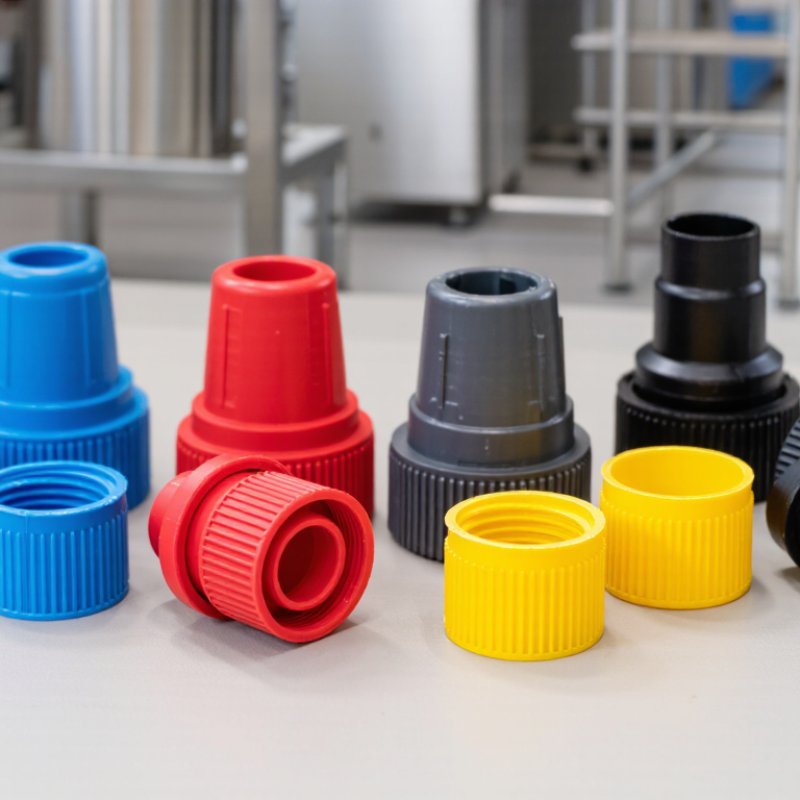
China Top 10 Anti Collision Cylinder Cap Suppliers?

Anti-Collision Cylinder Caps Explained: Materials, Designs, and ISO 11117 Tests

Anti-Collision Cylinder Caps Explained: Materials, Designs, and ISO 11117 Tests

An anti-collision cylinder cap protects the valve, not the cylinder body. In field inspections, damaged caps often show flattened crowns, cracked threads, or blocked vent openings. Steel offers strong impact resistance and economical production. Aluminum reduces weight, but it can deform under repeated impacts. ASM Handbook data lists about 276 MPa yield strength for 6061-T6 aluminum, while 304 stainless steel is near 215 MPa. These figures help, but they do not predict every real-world collision. Geometry matters more than many buyers expect.

ISO 11117:2019 defines requirements for valve protection caps and guards used on industrial and medical gas cylinders. Its evaluation considers fit, attachment, mechanical strength, and resistance to handling damage. A sound design should spread impact across the crown and shoulder, preserve wrench clearance, and avoid sharp edges. Vent openings also need careful placement. They must not become easy snag points. Industry safety guidance from the European Industrial Gases Association links poor valve protection with increased damage during transport and storage. The report does not make material selection simple. It highlights the need for inspection controls, compatible threads, and controlled tightening.

Drop and impact testing should imitate realistic handling, including corner strikes and tilted falls. Test records should show the cap remained attached and the valve stayed protected. Laboratory success can mislead. Dust, corrosion, temperature changes, and rushed loading still matter.

Anti-Collision Cylinder Caps Explained: Materials, Designs, and ISO 11117 Tests

Representative ultimate tensile strength ranges for materials commonly used in protective cylinder-cap construction. Actual performance varies with alloy grade, wall thickness, manufacturing process, temperature, and design geometry.

Steel and stainless steel generally provide high impact resistance, while aluminum reduces weight and engineering plastics can offer corrosion resistance and electrical insulation. ISO 11117 qualification focuses on the applicable design, dimensional, functional, and safety requirements for cylinder valve protection devices; it is not a ranking of materials or suppliers.

How to Select China’s Top 10 Suppliers: Quality, MOQ, Lead Time, and Capacity

Selecting China’s top 10 anti-collision cylinder cap suppliers requires more than comparing factory prices. Start with quality evidence: material certificates, dimensional inspection records, impact-test results, and traceability from resin or metal batch to shipment. ISO 9001 certification supports process control, but it does not prove every cap will fit your cylinder neck. Request samples from three production batches. Check thread accuracy, sealing contact, surface defects, and drop performance under your actual transport conditions.

MOQ can reveal a supplier’s real operating model. Ask for separate quantities for prototypes, pilot orders, and mass production. A low MOQ may indicate flexible tooling, but it can also carry higher unit costs. Confirm mold ownership, replacement-part availability, and acceptable defect rates in writing. The 2023 World Bank Logistics Performance Index ranked China 19th among 139 economies, with a score of 3.7; logistics remain capable, but port congestion and inland delivery still affect lead time.

Lead time should be measured from approved drawing and deposit, not from the first inquiry. Compare tooling time, daily output, shift patterns, raw-material reserves, and peak-season capacity. Request production photos, inspection checkpoints, and a shipment history covering at least six months. A supplier may quote ten-day delivery, yet lack capacity for a 100,000-piece order. That risk is easy to miss. UN Comtrade trade records can help compare China’s export activity, but they cannot verify factory-level quality. Independent audits and witnessed inspections remain necessary. Some supplier claims will look incomplete. Treat that as a reason to investigate, not an automatic rejection.

Supplier Comparison by 304/316 Stainless Steel, Impact Resistance, and Customization

When comparing China’s top 10 anti-collision cylinder cap suppliers, material grade deserves close attention. 304 stainless steel suits indoor facilities and normal humidity. 316 stainless steel performs better near saltwater, chemicals, and persistent outdoor moisture. The difference is not cosmetic. Molybdenum in 316 steel improves resistance to pitting, especially around welded seams and drainage points.

Impact resistance requires more than a thick-looking cap. Ask suppliers for wall thickness, steel hardness, weld quality, and tested impact energy. A useful sample test may include repeated strikes from a fixed height, followed by checks for deformation, sharp edges, and cylinder clearance. Some suppliers provide attractive figures without explaining the test method. That makes comparison difficult. Real experience matters here. A cap can survive one heavy impact and still fail after repeated forklift contact.

Customization separates practical suppliers from catalogue sellers. Confirm dimensions, mounting holes, anti-slip features, surface finish, warning colors, and packaging protection. Laser-cut samples should fit the cylinder without forcing alignment. Small errors become expensive during installation. Request material certificates, inspection photographs, and corrosion-test records before approving production. Independent verification is stronger than a polished brochure. Still, documents can contain gaps. I would inspect samples personally whenever possible, because a perfect drawing does not guarantee consistent fabrication.

Compliance Review: ISO 9001, ISO 11117, UN/DOT Rules, and Export Certifications

China Top 10 Anti Collision Cylinder Cap Suppliers?
Compliance Review: ISO 9001, ISO 11117, UN/DOT Rules, and Export Certifications

When reviewing Chinese anti-collision cylinder cap suppliers, compliance evidence matters more than product photographs. ISO 9001 shows a controlled quality system, but it does not automatically prove cap safety. Ask for the certificate’s current validity, site address, and approved production scope. For protective caps, ISO 11117 is more relevant because it covers design, construction, and testing requirements. Request test reports showing impact resistance, thread accuracy, material strength, and dimensional inspection. Small details matter. A loose cap can fail during handling.

UN and DOT requirements depend on the cylinder type, transport route, and destination market. A capable supplier should explain which rule applies instead of offering one generic certificate. Check whether the cap’s markings, packaging, and documentation support the intended shipment. Export files may include a commercial invoice, packing list, certificate of origin, material declaration, and applicable conformity documents. Some destinations also require local registration or importer review.

During factory assessment, inspect incoming material records and batch traceability. Ask how rejected caps are isolated. Ask for recent production samples, not only catalog images. A clean audit file helps, but it is not perfect evidence. I would still compare test results with physical samples and verify laboratory accreditation. Suppliers should also disclose limitations, such as untested temperatures or unsupported valve designs. That honesty is often more valuable than a polished claim.

China Top 10 Anti Collision Cylinder Cap Suppliers? - Compliance Review: ISO 9001, ISO 11117, UN/DOT Rules, and Export Certifications

Rank Anonymous Supplier Profile Typical Product Scope ISO 9001 Review ISO 11117 Relevance UN/DOT Compliance Review Export Documentation Evidence to Request Verification Status
1 Supplier Profile A — Forged Steel Specialist Forged steel valve-protection caps and heavy-duty cylinder guards Required for review
Certificate scope should cover forming, machining, welding or assembly, where applicable.
Applicable when the cap is designed as protection for transportable gas-cylinder valves; verify design and test evidence against the applicable ISO 11117 edition. Confirm compatibility with the cylinder specification, valve arrangement and destination requirements under applicable UN Model Regulations or U.S. DOT rules. Commercial invoice, packing list, certificate of origin when requested, product drawings and material/test reports. ISO certificate number, scope, expiry date, material certificate, dimensional report and impact/load-test report. Document verification required
2 Supplier Profile B — Aluminum Fabrication Specialist Lightweight aluminum caps, guards and protective frames Required for review
Check whether the certificate covers aluminum fabrication and final inspection.
Confirm that the selected alloy, wall thickness, attachment method and protection geometry meet the applicable design requirements. UN/DOT approval normally applies to the complete regulated cylinder or packaging system, not automatically to an unapproved accessory. Invoice, packing list, origin documentation, alloy certificate and product conformity statement. Alloy grade, hardness or strength report, drawing revision, coating specification and traceability records. Conditional acceptance
3 Supplier Profile C — Stainless Steel Specialist Corrosion-resistant caps for industrial and marine environments Required for review
Audit production controls, supplier controls and nonconforming-product procedures.
Review corrosion resistance, valve clearance, retention method and protection performance under the applicable standard. Check the final cylinder’s marking, periodic inspection and transport approval; accessory conformity alone does not establish DOT authorization. Commercial export documents plus stainless-steel mill certificate and inspection report. Steel grade, corrosion test method where claimed, weld procedure, weld inspection and batch traceability. Technical review required
4 Supplier Profile D — Wire-Form and Tubular Guard Specialist Tubular guards and wire-form anti-impact frames Required for review
Verify control of bending, welding, coating and final assembly.
Confirm that the guard prevents valve impact without restricting required handling, inspection or pressure-relief functions. Check whether the guard is part of a certified cylinder design and whether destination rules require a specific protection configuration. Invoice, packing list, origin certificate if required, drawings, coating report and packing declaration. Weld inspection, deformation test, coating thickness, load test and installation instructions. Sample testing recommended
5 Supplier Profile E — CNC-Machined Cap Specialist Precision-machined caps for defined valve and neck dimensions Required for review
Review calibration, inspection planning and revision control.
Verify thread, clearance, retention and impact-protection dimensions against the applicable specification. Confirm the accessory does not alter required cylinder markings, valve operation or approved transport configuration. Invoice, packing list, origin documents when requested, inspection report and technical drawing. CMM or calibrated gauge records, thread inspection, surface finish and first-article inspection report. First-article approval required
6 Supplier Profile F — Rubber-Isolated Protection Specialist Metal caps with elastomer bumpers and vibration isolation Required for review
Check outsourced rubber components and change-control records.
Evaluate material compatibility, temperature range, retention and impact protection for the intended gas-cylinder service. Verify that materials and construction are suitable for the applicable transport mode and cylinder approval. Invoice, packing list, material declarations and export packing documentation. Elastomer specification, temperature and chemical-compatibility data, retention test and batch records. Material validation required
7 Supplier Profile G — Powder-Coated Guard Specialist Painted and powder-coated steel protective assemblies Required for review
Verify coating process control and final inspection records.
Confirm coating does not obscure required cylinder markings or interfere with valve access and inspection. Review complete-cylinder transport compliance separately; a coating or guard certificate is not a UN/DOT cylinder approval. Invoice, packing list, certificate of origin if requested, coating report and packaging declaration. Coating thickness, adhesion, corrosion test where specified, color standard and marking-visibility inspection. Coating records required
8 Supplier Profile H — High-Pressure Cylinder Accessory Specialist Protection caps and guards for high-pressure industrial-gas cylinders Required for review
Confirm process capability, inspection frequency and corrective-action system.
Check compatibility with high-pressure valve geometry and the applicable ISO 11117 protection requirements. For U.S. shipments, review applicable 49 CFR requirements and the cylinder’s DOT specification or special permit where relevant. Invoice, packing list, origin documents when requested, pressure-service material data and inspection report. Pressure-service suitability statement, dimensional report, impact test, torque/retention data and traceability. Destination-law review required
9 Supplier Profile I — OEM-Adaptable Design Specialist Customized caps and guards matched to customer cylinder necks and valves Required for review
Review design control, customer specifications and engineering change management.
Require a documented design review and testing plan for each cylinder and valve configuration. Verify that customer-specific modifications do not invalidate the cylinder manufacturer’s approval or transport documentation. Invoice, packing list, origin documentation if requested, approved drawings and conformity statement. Signed drawing approval, prototype report, fit test, impact test, revision history and production sample records. Customer approval required
10 Supplier Profile J — Export-Ready Assembly Specialist Finished protective assemblies with export packing and batch control Required for review
Check warehouse, packaging, traceability and complaint-handling controls.
Confirm that final assembly and installation instructions preserve the intended ISO 11117 protection function. Determine whether the shipment contains regulated cylinders or only accessories; transport obligations differ accordingly. Commercial invoice, packing list, transport documents, certificate of origin where required and product test file. Batch label, packing photos, final inspection report, export classification review and document-control records. Pre-shipment audit recommended
Compliance note: ISO 9001 certifies a quality-management system and does not by itself certify a cylinder cap. ISO 11117 should be checked for the applicable cylinder-protection design and testing requirements. UN and U.S. DOT approvals generally concern the regulated cylinder, valve and transport configuration; an accessory supplier should provide compatibility and test evidence rather than claim automatic UN/DOT approval. Final requirements depend on cylinder specification, gas service, transport mode and destination country.

Procurement Checklist: Pricing, Samples, Warranty, Inspection, and After-Sales Support

China Top 10 Anti Collision Cylinder Cap Suppliers?

When comparing ten suppliers, request a detailed quote before discussing price alone. Check material, dimensions, color, packaging, MOQ, tooling, and shipping terms. Ask whether the price is EXW or FOB. A low unit price may hide mold fees or weak packaging. Request two or three samples from different production batches. Inspect the cap’s fit, wall thickness, flexibility, and recovery after compression. A useful sample should survive repeated installation, not only look smooth.

Ask for a written warranty with clear coverage and response times. Confirm whether it covers cracking, poor adhesion, color fading, or incorrect dimensions. Request inspection records, material data, and test methods. An independent inspection can check random cartons, quantity, labeling, and drop resistance before shipment. Photos are helpful, but they are not proof. I once trusted factory images too quickly. The delivered caps had uneven edges.

After-sales support matters when replacement parts are urgent. Confirm one contact person, spare-part policy, complaint handling, and corrective-action reports. Ask how quickly the supplier can investigate a failed batch. Keep approved samples, drawings, and inspection criteria in one file. Small details prevent arguments later. However, no checklist removes every risk. Production changes, transport pressure, and unclear measurements still require human review. Recheck critical dimensions before every repeat order.