
Your Source for Trays!

China Top Stainless Steel Shackles Manufacturers and Suppliers

China’s stainless-steel hardware sector has become increasingly important for marine, construction, and industrial lifting applications. Stainless Steel Shackles are small components, yet they often carry serious loads. Their performance depends on alloy quality, heat treatment, pin design, certification, and inspection discipline.

Grand View Research reports that the global lifting equipment market was valued at approximately USD 75.7 billion in 2023. It also projects steady growth through 2030. This broader market does not measure Stainless Steel Shackles separately. That limitation matters. Many online articles present narrow product estimates as exact facts, although reliable public data remains limited. Buyers should question unsupported figures.

Corrosion resistance is a practical advantage. A 316 stainless-steel shackle can withstand salt spray better than ordinary carbon steel. However, corrosion resistance does not replace correct working-load limits. The International Maritime Organization and widely used ASME B30.26 guidance both emphasize proper inspection and safe rigging practices. Standards still need careful interpretation.

Rigging educator Mike Parnell offers a useful safety principle: “A shackle is only as reliable as its inspection, loading, and connection.” The wording is simple. The lesson is not. A bent bow, damaged thread, or side-loaded pin can compromise a seemingly strong product. China’s leading manufacturers therefore need more than attractive catalogs. They need traceable materials, documented testing, consistent dimensions, and responsive technical support.

This guide examines China’s top Stainless Steel Shackles manufacturers and suppliers through those practical criteria. Product claims deserve verification. Supplier reputation deserves evidence. That is where this market discussion becomes useful.
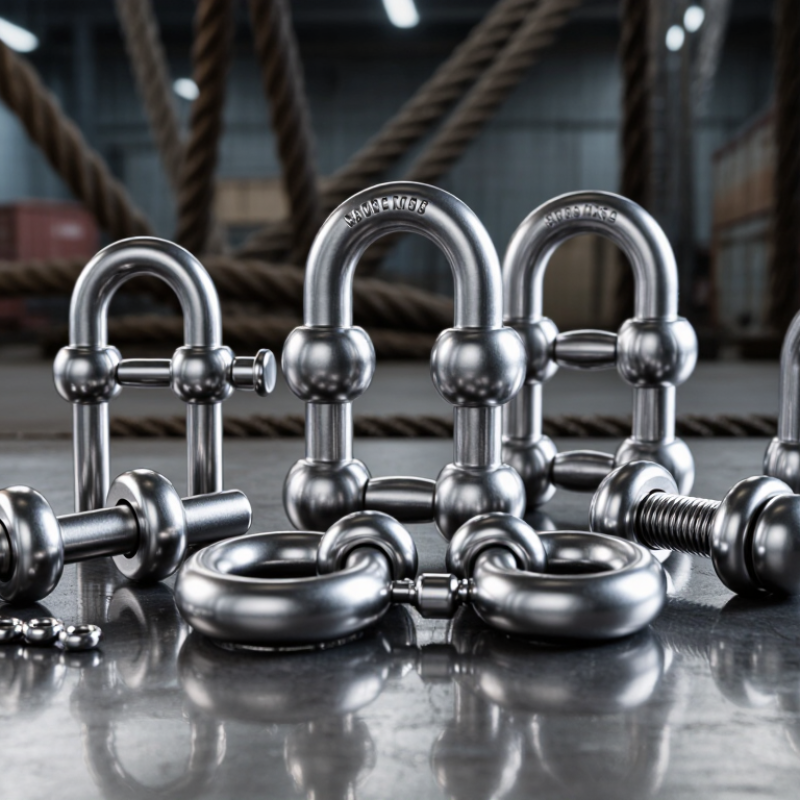
China Top Stainless Steel Shackles Manufacturers and Suppliers

China’s Stainless Steel Shackle Market: Grades 304, 316, and 316L

China’s stainless steel shackle market mainly serves marine, lifting, construction, and industrial applications. Grade 304 is widely selected for indoor use and ordinary outdoor conditions. It offers practical corrosion resistance and consistent mechanical performance. However, salt spray can stain 304 over time.

Grade 316 contains molybdenum, which improves resistance to chloride exposure. It suits coastal equipment, harbor fittings, and wet processing areas. Grade 316L has lower carbon content, making it a better choice near welded joints.

In practice, suppliers should confirm material certificates, heat numbers, and proof-load results. A polished surface looks clean, but surface appearance alone proves little. I have seen buyers overlook thread quality while comparing prices.

Tips: Match the grade to the environment, not only the quotation. Ask for load ratings, inspection records, and dimensional drawings. Check pin movement before installation. For lifting work, verify the shackle’s working load limit and connection angle. Also, avoid mixing uncertain stainless grades in one assembly. Small differences can become costly failures.

Shackle Standards: ASME B30.26, EN 13889, and 5:1 Design Factors

China Top Stainless Steel Shackles Manufacturers and Suppliers

Reliable stainless steel shackles begin with clear standards, not attractive catalog photos. ASME B30.26 addresses rigging hardware selection, inspection, and safe use. EN 13889 covers forged steel shackles, including marking, proof testing, and performance requirements. For stainless products, confirm that the declared standard truly applies to the material and design.

A 5:1 design factor means the minimum breaking load is five times the working load limit. It does not make every application automatically safe. Side loading, shock loading, corrosion, worn pins, and poor alignment can reduce capacity. Inspectors should compare markings with test certificates and load tables. One detail is easy to miss. The working load limit may change when the shackle is loaded at an angle.

Tips: Check the body and pin for cracks, deep scratches, distortion, and thread damage. Keep the load centered. Never exceed the marked working load limit. Ask suppliers for material records, proof-test evidence, and traceable batch information.

Practical purchasing requires careful questions. A supplier should explain manufacturing controls, inspection frequency, and certificate scope. A polished certificate is not enough if its dimensions differ from the delivered shackle. No checklist is perfect. Recheck assumptions, especially when saltwater exposure, lifting angles, or repeated loading are involved.

China Stainless Steel Shackles: ASME B30.26 vs EN 13889

Minimum design-factor comparison for lifting shackles, expressed as the ratio of minimum breaking load to working load limit.

ASME B30.26 references a 5:1 design factor for shackles, while EN 13889 uses a 6:1 minimum breaking-force relationship for general lifting shackles. A higher ratio indicates a greater margin between the working load limit and the minimum breaking load. Always confirm the applicable standard edition, shackle grade, loading mode, inspection requirements, and manufacturer certification before selection or use.

Manufacturing Quality: Forging, Welding, WLL Testing, and ISO 9001 Controls

China’s stainless steel shackle manufacturers and suppliers rely on controlled processes to produce dependable lifting hardware. Forging shapes heated stainless steel under pressure, helping create consistent grain flow around the bow and pin. Temperature control matters. Excessive heat can affect corrosion resistance and mechanical properties. After forging, technicians inspect surfaces for cracks, folds, and incomplete forming.

Welding requires qualified procedures, trained operators, and suitable filler materials. Critical welds should receive visual inspection and, where required, non-destructive testing. Each shackle must also undergo WLL testing based on its rated working load limit. Test equipment needs regular calibration, while results should remain traceable to heat numbers and production batches.

ISO 9001 controls support this system through documented procedures, corrective actions, and supplier evaluations. No workshop is flawless. A missed inspection mark or unclear record can expose a process weakness, so honest review remains essential.

Tips: Ask for material certificates, WLL test reports, calibration records, and inspection criteria before purchasing. Check whether the supplier explains rejection handling clearly. Photos help, but controlled records matter more. Confirm markings are legible on the shackle body, including size, grade, and WLL. Small details matter.

How to Evaluate Chinese Suppliers: Traceability, MTCs, and Load-Test Reports

When sourcing stainless steel shackles from China, supplier evaluation should begin with traceability, not attractive pricing. Ask for heat numbers linked to raw material certificates, production records, and final inspection documents. Each shackle should carry a readable identification mark. That mark must connect to the shipment paperwork.

MTCs, or Material Test Certificates, should state the stainless steel grade, heat number, chemical composition, and mechanical properties. Check whether the certificate comes from the mill or only from the supplier. Compare the MTC details with markings on samples and packing lists. A polished PDF is not proof. I have seen documents with correct formats but incomplete batch links. That weakness deserves attention.

Load-test reports should identify the tested model, quantity, test load, date, equipment, and acceptance result. Request calibration records for the testing machine. Confirm that the report matches the shackle’s working load limit and design configuration. Photos can add useful evidence, especially when they show markings, test setup, and gauge readings. Still, photos alone cannot replace controlled records.

A capable supplier should answer technical questions clearly and consistently. Ask for a sample traceability package before placing a large order. Review one real batch from raw material to final inspection. Small gaps may reveal larger process problems. My own evaluation would not stop at a successful sample; repeated production evidence matters more. Supplier quality can change, and assumptions should be checked again.

Applications and Selection: Marine, Rigging, Lifting, and Corrosion Environments

Stainless steel shackles are compact, but their selection affects entire lifting systems. In marine work, they connect anchor lines, davits, chains, and deck fittings. Salt spray quickly exposes weak material choices. Grade 316 stainless steel is commonly preferred because molybdenum improves resistance to pitting. Still, corrosion resistant does not mean corrosion proof. Inspect threads, pins, and bowl surfaces after repeated exposure. Small flaws matter.

Rigging and lifting require careful load assessment. Match the working load limit to the actual load, sling angle, and shock conditions. Never treat breaking load as a safe working load. Bow shackles suit multiple-leg slings, while dee shackles provide more direct alignment. Screw pins work well for temporary connections. Bolt-type pins are better for secured, repeated lifting operations. When sourcing from Chinese manufacturers and suppliers, request certificates, dimensions, traceability, and test records. A polished surface may look impressive, but appearance alone proves little.

In chemical, coastal, and humid environments, select stainless steel according to exposure, temperature, and contact materials. Avoid mixed metals where galvanic corrosion may develop. Rinse salt deposits with fresh water, dry the hardware, and lubricate compatible threads. Do not use shackles with bent pins, deep scoring, seized threads, or unclear markings. Supplier quality can vary, so independent inspection deserves attention. One practical lesson is easy to miss: oversized hardware is not automatically safer. It can distort the load path and create poor alignment. Selection should be reviewed whenever the application changes.

China Top Stainless Steel Shackles Manufacturers and Suppliers - Applications and Selection: Marine, Rigging, Lifting, and Corrosion Environments
Application Typical Environment Common Stainless Steel Choice Recommended Shackle Configuration Key Selection Criteria Important Limitations and Safety Notes
Marine Mooring and Deck Hardware Salt water, spray, humidity, tidal exposure, and outdoor storage. AISI 316 / 316L
Typically contains molybdenum, which improves resistance to chloride pitting compared with 304 stainless steel.
Bow or anchor shackle for multidirectional connection; screw-pin type for occasional access; captive-pin type where pin retention is important.
  • Use a pin diameter and body size suitable for the intended load.
  • Prefer smooth, well-finished surfaces that reduce salt deposits.
  • Check whether the shackle is intended for permanent marine hardware or temporary lifting.
Stainless steel is not immune to crevice corrosion. Rinse salt deposits with fresh water and avoid stagnant, tightly enclosed wet joints.
General Rigging and Tensioning Outdoor rigging, architectural cables, shade structures, fencing, and light mechanical connections. AISI 304 for normal atmospheric exposure;
AISI 316 / 316L for coastal, industrial, or chloride-bearing locations.
Dee shackle for primarily in-line loading; bow shackle where a wider connection angle is required.
  • Confirm the shackle's working load limit, if one is specified.
  • Match the shackle opening to the cable, chain, eye, or fitting without side loading.
  • Use compatible stainless steel components to reduce galvanic corrosion.
Do not load the shackle across the side or force a pin through an undersized eye. Side loading can substantially reduce the allowable capacity.
Lifting and Overhead Handling Hoisting, lifting slings, below-the-hook assemblies, and personnel-free load handling. Use only a stainless steel shackle specifically designed, tested, marked, and certified for lifting service. Usually a forged bow or dee shackle with a secured pin, permanent identification, and a stated working load limit.
  • Look for permanent markings such as rated capacity, size, material or grade, and manufacturer traceability.
  • Verify compliance with the purchaser's required lifting standard and inspection program.
  • Consider load angle, sling angle, dynamic loading, and temperature.
An unmarked decorative or marine shackle must never be assumed to be suitable for overhead lifting. Working load limits must come from the product's verified design and test documentation.
Chemical and Industrial Corrosion Areas Process plants, washdown areas, chemical vapors, industrial atmosphere, and contaminated water. Select the stainless grade from the actual chemical exposure. 316 is generally more chloride-resistant than 304, but neither grade is suitable for every chemical. Select a configuration that minimizes crevices and allows inspection, cleaning, and drainage.
  • Identify chemical concentration, temperature, exposure duration, and cleaning agents.
  • Request corrosion compatibility data for the exact environment.
  • Consider passivation and an appropriate surface finish where specified.
Chlorides, strong acids, reducing chemicals, and elevated temperatures can cause localized corrosion or stress-corrosion cracking. Material selection should be reviewed by a qualified engineer.
Architectural Cable and Outdoor Structures Facade systems, railings, shade sails, cable bracing, and exposed structural fittings. AISI 316 / 316L is commonly selected for coastal or highly exposed locations; 304 may be suitable for inland, low-chloride atmospheres. Compact dee shackles for in-line cable connections; bow shackles for wider attachment geometry.
  • Check hole diameter, pin clearance, cable termination size, and visible finish.
  • Use a safety factor appropriate to the structural design.
  • Provide drainage and avoid water-trapping pockets.
A polished appearance does not prove structural suitability. Confirm mechanical capacity and inspect for wear, thread damage, deformation, and corrosion staining.
Permanent Outdoor Connections Long-term exposure to rain, condensation, ultraviolet radiation, and changing temperatures. 304 for moderate inland exposure; 316 / 316L for marine, de-icing salt, or polluted coastal conditions. Captive-pin or secured-pin configuration where accidental pin loss would create an unacceptable risk.
  • Provide a planned inspection and maintenance interval.
  • Prevent dissimilar-metal contact or electrically isolate incompatible metals.
  • Use the correct pin locking method for vibration and movement.
Vibration can loosen screw pins. A locking arrangement may be required, but it must not interfere with the shackle's designed load path.
Washdown and Hygienic Areas Frequent water cleaning, food-processing environments, humid interiors, and areas requiring easy sanitation. 304 or 316 / 316L depending on chloride, cleaning chemical, and temperature exposure. Simple, smooth-profile shackle with accessible surfaces and minimal crevice formation.
  • Specify a cleanable surface finish and avoid sharp recesses.
  • Confirm resistance to detergents, sanitizers, and hot-water cycles.
  • Rinse and dry components after cleaning where practical.
Cleaning chemicals can be more aggressive than the surrounding atmosphere. Validate the grade against the actual sanitation process.
Selection reference: AISI 304 generally provides good general-purpose atmospheric corrosion resistance, while AISI 316 / 316L offers improved resistance to chloride-related pitting because of its molybdenum content. For lifting applications, select only products with a verified working load limit, permanent identification, appropriate testing, and documentation required by the applicable project or regulatory standard. Common references may include EN 13889 for forged steel shackles and ASME B30.26 for rigging hardware, subject to the exact product type and application.