China Best Machine Vision Inspection Systems What You Need to Know
The landscape of manufacturing is rapidly changing, driven by technological advancements. In this context, Machine Vision Inspection systems have emerged as vital tools. According to a recent report by MarketsandMarkets, the machine vision market is expected to reach $12 billion by 2024, growing at a CAGR of 7.5%. This growth reflects the increasing need for quality assurance and automated inspection processes across various industries.
Machine Vision Inspection plays a crucial role in enhancing product quality and reducing operational costs. By employing sophisticated algorithms and high-resolution cameras, these systems can identify defects more accurately than the human eye. For instance, they can detect minute discrepancies in a production line that workers might overlook. However, reliance on technology does present challenges, such as integration difficulties and the need for ongoing maintenance.
As companies embrace these systems, they must also consider potential pitfalls. The initial investment can be substantial, and not all systems perform equally well in diverse environments. Companies must conduct thorough assessments before implementation. Hence, understanding the nuances of Machine Vision Inspection is essential for leveraging its full potential in the manufacturing sector.
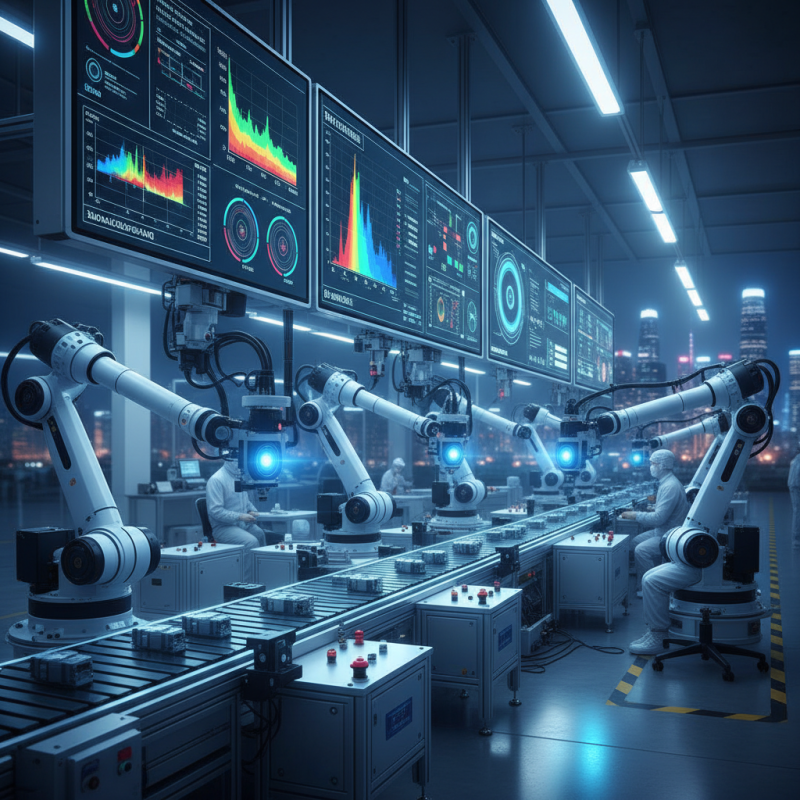
China's Machine Vision Market Overview and Growth Projections
China's machine vision market has been rapidly evolving. As industries embrace automation, the demand for efficient inspection systems has soared. In 2021, the market was valued at over a billion USD. Projections suggest continued growth over the next five years. By 2026, estimates indicate the market could double. Such potential is exciting, yet there are challenges to consider.
The increased investment in technology isn't without obstacles. Many companies face a learning curve in adopting machine vision systems. Training staff and integrating these systems into existing workflows can be daunting. The complexity of algorithms and software often frustrates users. Additionally, the inconsistent quality of some local manufacturers raises concerns. It's wise to conduct thorough research and evaluation before committing to a solution.
Despite these hurdles, the outlook remains positive. Manufacturers are innovating, developing smarter systems with enhanced capabilities. There is a clear trend toward customization to meet specific needs. While the journey into machine vision inspection may present difficulties, the potential benefits can be transformative. Embracing this technology could be a game-changer for many sectors in China.
China Best Machine Vision Inspection Systems - Market Overview and Growth Projections
| Category | Value ($ Million) | Growth Rate (%) | Market Share (%) |
| Industrial Robots | 1500 | 10 | 25 |
| Machine Vision Software | 800 | 12 | 15 |
| Cameras and Imaging Tools | 950 | 9 | 20 |
| Lighting Solutions | 600 | 8 | 10 |
| Total Market Size | 3850 | 10.5 | 100 |
Key Technologies Driving Machine Vision Inspection Systems in China
Machine vision inspection systems are increasingly vital in Chinese manufacturing. They enhance quality control and boost efficiency. These systems rely on advanced technologies to achieve high precision. Cameras capture images, while software analyzes them. The integration of artificial intelligence refines inspection processes. This helps in detecting defects that the human eye might overlook.
One key technology is image processing. It allows machines to interpret visual data effectively. Deep learning algorithms improve accuracy over time. However, some challenges exist. Not all environments are suitable for these systems due to lighting variations. Additionally, training AI can be resource-intensive. Proper calibration is crucial but sometimes neglected. This oversight can lead to inaccurate results.
Another factor is the demand for customized solutions. Different industries have unique requirements. Some seek speed, while others prioritize precision. This variety complicates the design of universal systems. There’s a constant need for adaptation. Companies must be willing to reflect on their processes. Innovations come from questioning existing methods and seeking improvements.
Comparison of Leading Machine Vision Inspection Systems Manufacturers
When assessing machine vision inspection systems, it's crucial to explore various manufacturers. Many options exist, each offering different technologies and features. Some focus on high-speed inspections, while others prioritize accuracy. This diversity increases the challenge of selecting an appropriate system for specific needs.
Consider factors like image processing speed and resolution. Speed is vital for high-volume production lines. A slower system may cause bottlenecks. However, higher resolution can enhance defect detection. Balancing these elements is not easy. Not every manufacturer excels in both areas.
Another point of reflection is user interface design. A complex interface can hinder productivity. Some systems might appear advanced but require extensive training. Manufacturers sometimes overlook the importance of intuitive operation. Assessing usability can save time and reduce errors in the long run.
Comparison of Machine Vision Inspection Systems Performance
This chart compares the accuracy percentages of various leading machine vision inspection systems. The data reflects their performance based on independent evaluations, providing insights into their relative effectiveness.
Application Areas for Machine Vision Systems in Chinese Industries
Machine vision systems play a vital role across various industries in China. These systems automate the inspection process, ensuring precision in manufacturing and quality control. In the electronics sector, for instance, they examine circuit boards for defects. This contributes to fewer failures in devices, enhancing overall consumer trust. However, relying solely on machines can overlook subtle human errors.
The food industry also benefits significantly from machine vision. These systems can detect contaminants and ensure packaging integrity. This leads to safer products for consumers. Yet, challenges remain, such as occasional misinterpretation of product images, leading to potential waste. Each technology's reliability must be continuously improved.
Moreover, in the automotive sector, these systems identify surface flaws on parts. This is crucial for safety and performance. However, the balance between speed and accuracy can be hard to achieve. Sometimes, a trade-off results in imperfect inspections. Continuous feedback loops are necessary to address these shortcomings and improve efficiency.
Challenges and Future Trends in China's Machine Vision Technology
In recent years, China has made significant strides in machine vision technology. However, challenges remain. The rapid growth has led to an increase in demand for more sophisticated inspection systems. Many factories still rely on outdated technology. This disparity creates inefficiencies. There is a pressing need for upgrades in aging infrastructures.
Another challenge is the lack of skilled workers. While China produces many engineers, expertise in machine vision is still developing. Training programs need improvement. The industry must address this skills gap. Without skilled professionals, the implementation of advanced systems becomes hindered.
Looking forward, the future of machine vision in China appears promising yet complex. Innovations are on the horizon, including artificial intelligence integration. However, companies may struggle to adapt to these new technologies. The balance between innovation and practicality is delicate. Moreover, ethical considerations in automation must be addressed. These factors will shape the landscape of machine vision systems in the coming years.