
585.204.6770
sale@sanblueplastics.com
Your Source for Trays!
Hard Tpu is chosen for parts that must resist abrasion, keep their shape, and withstand repeated handling. A phone case, caster wheel, or industrial seal can look similar in a sample photo. Their performance may differ sharply after heat, pressure, or prolonged use. Buyers should compare more than Shore hardness. Ask for test conditions, batch consistency, compression-set data, and traceable quality records.
Grand View Research estimated the global thermoplastic polyurethane market at about USD 2.9 billion in 2023, with continued growth forecast through 2030. This figure covers TPU broadly, not Hard TPU alone. It signals a growing market, but it does not rank Chinese suppliers or prove product quality. That distinction matters. A polished brochure is not a test report.
Covestro CEO and polymer chemist Dr. Markus Steilemann has described the company’s circularity ambition with the words, “We want to become fully circular.” This broader materials goal is relevant, but durability still needs evidence in each application. The best Hard TPU manufacturers in China should therefore be assessed through verifiable specifications, sample testing, production controls, and clear communication—not claims alone. A small caveat: buyers may not receive comparable test data from every supplier, so independent validation can be worthwhile. This guide introduces practical criteria for building a shortlist, while recognizing that the right manufacturer depends on the part, operating conditions, and required service life.
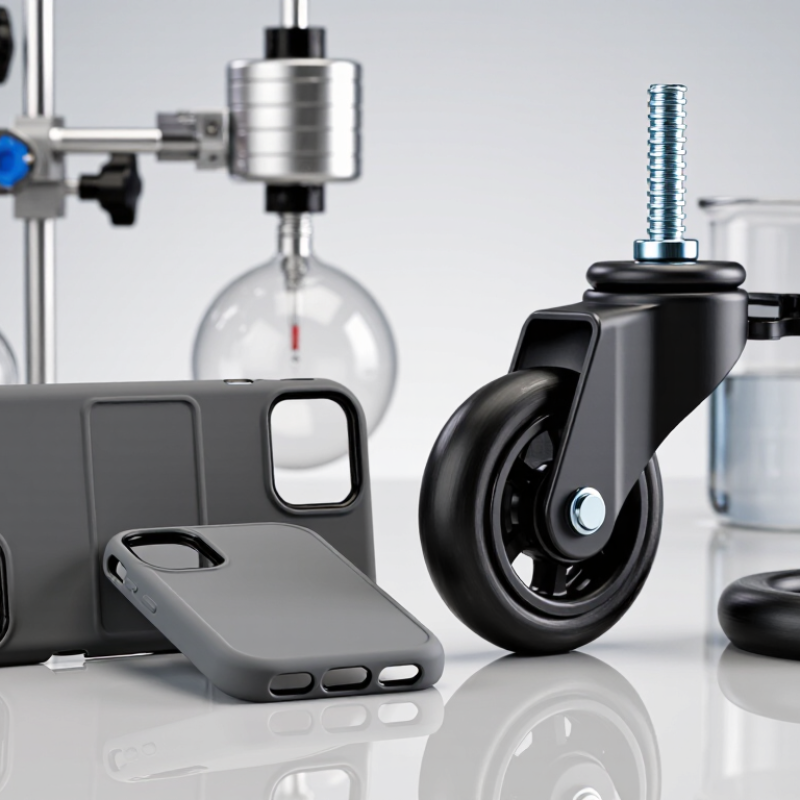
Hard TPU is valued for its firm feel and resistance to deformation, but “hard” needs a measurable definition. Shore D hardness, measured using ASTM D2240, is commonly used for harder elastomers and plastics. The durometer presses a defined indenter into the specimen and records its resistance. The result is a scale reading, not a direct measure of strength, wear life, or impact performance.
For a useful comparison, manufacturers should identify the Shore scale, test conditions, specimen details, and reading time. Thickness, surface finish, temperature, and operator technique can all affect results. Measurements should be taken on a suitable, flat area and repeated at separate locations. Numbers vary. A single value without test context may look precise but tell buyers very little. When assessing Chinese suppliers, request test reports tied to the material grade or production batch, then compare like with like.
Tips: Check that the report names ASTM D2240 and Shore D. Ask how the sample was conditioned and how many readings were averaged. Small details matter. Even careful testing has limits, so treat hardness as one selection criterion, not the whole verdict.
Hard TPU grades are often compared by Shore hardness, but that number cannot predict tensile performance on its own. ISO 37 testing gives a clearer view of how a material responds when stretched. A dumbbell-shaped specimen is pulled at a controlled speed until it breaks. The test can report tensile strength, elongation at break, and stress at a specified extension.
Details matter. Specimen thickness, conditioning, temperature, and test speed can shift the results. For a fair comparison, ask manufacturers to test samples using the same ISO 37 method and to identify the grade and batch. A sheet that feels stiff between your fingers may still stretch substantially before failure. Hardness and tensile behavior are related, but they are not interchangeable.
Look beyond a single peak-strength figure. A high value may suit a load-bearing part, while limited elongation could make it less tolerant of sharp bends or assembly strain. Compare the full stress–strain curve, including how the material behaves before it reaches its maximum load. Small differences in sample preparation can matter. Supplier data is useful, though independent repeat tests can reveal variation that one report misses. That extra check is not always convenient, but it can prevent a confident choice based on incomplete evidence.
When comparing hard TPU manufacturers in China, ask how they measure tear resistance, not just hardness. ISO 34-1 describes methods for measuring the force needed to propagate a tear in rubber-like materials, including thermoplastic elastomers. The chosen test-piece shape matters, so results should identify the method used.
A specimen is pulled at a controlled speed until a tear advances. The measured force is related to specimen thickness and commonly reported in kilonewtons per metre. Keep the conditions consistent: thickness, temperature, conditioning, and test speed can all affect the result. Small differences matter. A glossy data sheet can still hide important details.
ISO 34-1 tear strength is not the same as tensile strength or puncture resistance. For hard TPU, compare samples made with similar geometry and processing, and request actual test records where possible. Ask whether the reported value is a typical result or a guaranteed specification. Then check that the test method and specimen type match your application. One limitation remains: a lab result cannot fully predict tearing around sharp corners, thin sections, or molded notches in service. Real parts can behave differently.
ISO 34-1 compares tear resistance using three standardized test-piece geometries. This chart shows the test methods covered—not manufacturer results or tear-strength measurements.
For a meaningful hard-TPU comparison, test samples under the same ISO 34-1 method and report tear strength in kN/m. Results depend on the TPU formulation, specimen geometry, and test conditions.
For hard TPU, a single “abrasion-resistant” claim says little without a test record. Chinese suppliers can validate performance using ISO 4649:2017, which measures rubber and elastomer abrasion with a rotating drum device. The standard’s common setup uses a 10 N load and a 40 m abrasion path. Results are reported as relative volume loss, not just visual wear. Lower volume loss generally indicates better resistance under the specified conditions.
A credible lab conditions specimens before testing, checks their density, and records the abrasive sheet, load, path, and reference-material result. Technicians weigh each specimen before and after the run. A small balance reading matters. They should test multiple samples from the same production batch, then report both the average and spread. Hard TPU can still vary with formulation, molding, and surface finish.
ISO numbers are useful, but not magic. Results from different labs may differ if conditioning or abrasive-sheet control is weak. One test cannot predict every shoe-floor or conveyor application. Buyers should ask for dated reports, specimen details, and repeat-test records—not only a certificate image. The awkward part: suppliers sometimes overlook batch variation. That deserves a closer look.
Choosing a hard TPU manufacturer starts with the grade, not the catalogue. Define the target hardness, operating temperature, chemical exposure, and part geometry. A Shore D value alone cannot predict performance in a finished component. Ask for samples made with a similar process, then check stiffness, impact behavior, and surface finish. Small changes in wall thickness can alter results. That matters.
Testing should match the application. Request recent data for tensile strength, abrasion, and compression set, with test methods and specimen conditions clearly stated. Compare results across production lots, not just one carefully prepared sample. A data sheet is useful, but it can still hide variation. Ask how the factory controls raw materials, drying, temperature, and inspection frequency. Request traceable lot records and clear guidance on storage and processing. Not every supplier will disclose every detail, so note what remains uncertain.
Production fit needs equal attention. Confirm the available molding or extrusion equipment, minimum order quantities, lead times, and capacity during busy periods. Ask whether pilot runs are possible before committing to larger volumes. Watch the parts after cooling: warping, inconsistent dimensions, or difficult demolding can reveal process issues. A polished sample is encouraging, not proof. Your best match is the manufacturer that can explain trade-offs plainly and repeat the required grade at your expected volume.
| Evaluation Dimension | What to Specify | Relevant Data or Test Method | Evidence to Request from a Manufacturer | Best Fit for Your Project |
|---|---|---|---|---|
| Hardness and grade selection | State the required hardness scale, target value, and tolerance. Hard TPU grades are commonly specified on the Shore D scale, but the suitable grade depends on the part design and application. | Shore hardness: ASTM D2240 or ISO 868. A broad screening range for hard TPU is approximately 40–75 Shore D; confirm the actual available grade and test conditions with the supplier. | Current technical data sheet (TDS), hardness test method, specimen details, and a production-lot test report. | Choose a supplier that can offer a grade near the required hardness and confirm the value on samples made using the intended test method. |
| Tensile performance | Define the minimum tensile strength, elongation at break, and—where needed—modulus. These properties vary by formulation, hardness, and specimen preparation. | ASTM D412 or ISO 37. Compare results only when specimen geometry, conditioning, and test conditions are consistent. | Test reports identifying the grade, lot, specimen type, conditioning, test standard, and measured results. | Suitable for parts that must resist stretching, pulling, or repeated deformation while retaining a specified strength level. |
| Tear resistance | Set a minimum tear-strength requirement if the part has thin sections, edges, notches, or repeated flexing. | ASTM D624 or ISO 34-1. Results depend on specimen type and test procedure. | Grade-specific tear data and reports using the specimen type relevant to the application. | Important for covers, flexible protective components, seals, and parts exposed to edge damage or flexing. |
| Abrasion resistance | Specify the test method and acceptance limit rather than relying on general claims such as “high abrasion resistance.” | ISO 4649 or DIN 53516; results are reported as volume loss under the stated test conditions. | Test method, abrasive wheel and load details, conditioning, and measured volume loss. | Useful for wheels, rollers, soles, and other components exposed to sliding or repeated surface contact. |
| Processing compatibility | Confirm the intended process—such as injection molding or extrusion—and define the required melt-flow or processing window. | Melt mass-flow rate can be measured under specified conditions using ISO 1133-1. The selected temperature and load must be stated for meaningful comparison. | Processing recommendations, drying guidance, molding or extrusion conditions, and melt-flow test conditions where applicable. | Best for projects where stable processing, cycle time, or consistent extrusion behavior is critical. |
| Batch consistency and quality control | Agree on the properties to be checked for every lot, the sampling plan, and the acceptable variation. | Use the same agreed test methods for incoming inspection and supplier reports; hardness, appearance, and selected mechanical properties can be included in the control plan. | Lot traceability, certificate of analysis (COA), inspection records, and a written process for handling nonconforming material. | Prioritize this capability for repeat orders, multi-cavity molding, and products with tight dimensional or performance requirements. |
| Production readiness and supply | Document sample lead time, order quantity, monthly demand, packaging, delivery schedule, and capacity reservation requirements. | These are project-specific commercial and operational terms; they cannot be reliably inferred from a grade data sheet. | Written sample and production lead times, confirmed order quantities, capacity plan, packaging details, and contingency arrangements. | Best for buyers who need dependable replenishment or a defined ramp from trial production to recurring orders. |
| Application-specific requirements | Identify exposure to heat, moisture, oils, chemicals, UV, or repeated loading, and specify the required service conditions. | Choose a relevant exposure or ageing test with the supplier; there is no single test that establishes suitability for every service environment. | Grade-specific test data for the stated exposure, plus trial parts evaluated under representative conditions. | Choose a manufacturer able to recommend and validate a grade against the actual service environment, not hardness alone. |
Selection note: The hardness range shown is a screening guide, not a guarantee that every manufacturer offers those grades. Confirm all properties, test conditions, tolerances, and production commitments in the current grade documentation and purchase specification.