Your Source for Trays!

What Is the Best China BESS Battery Energy Storage System?

Choosing the best China Bess Battery Energy Storage System requires more than comparing battery prices. It requires evidence from operating projects, verified safety records, and transparent lifetime costs. China remains the largest battery manufacturing hub, with strong advantages in lithium iron phosphate cells, power conversion systems, and integrated container design.

The International Energy Agency reported that global battery storage additions nearly tripled in 2023, reaching about 42 GW. Its Batteries and Secure Energy Transitions report also identifies China as a central force in expanding battery supply chains and reducing manufacturing costs. BloombergNEF has similarly documented rapid growth in stationary storage deployments, driven by renewable integration, peak-load management, and falling battery prices. These figures are impressive. They are not the whole answer.

A reliable BESS must perform through heat, dust, cycling, grid fluctuations, and emergency shutdowns. Site conditions matter. A desert project and a coastal factory need different thermal and corrosion strategies. Dr. Imre Gyuk, a leading U.S. energy-storage expert, has stated, “Energy storage is the key to making renewable energy work.” That principle explains the real buying question: can the system deliver safe, predictable energy after years of operation?

This guide examines leading Chinese BESS suppliers through cell chemistry, round-trip efficiency, degradation, warranty terms, fire protection, software, and service capability. It also considers the uncomfortable details, including unclear performance assumptions and optimistic warranty language. The cheapest system may become expensive when replacement cells, downtime, or weak local support appear. No single model is best everywhere. The right choice depends on project duration, climate, grid requirements, financing, and risk tolerance.

What Is the Best China BESS Battery Energy Storage System?

What Defines a China BESS Battery Energy Storage System?

What Defines a China BESS Battery Energy Storage System?

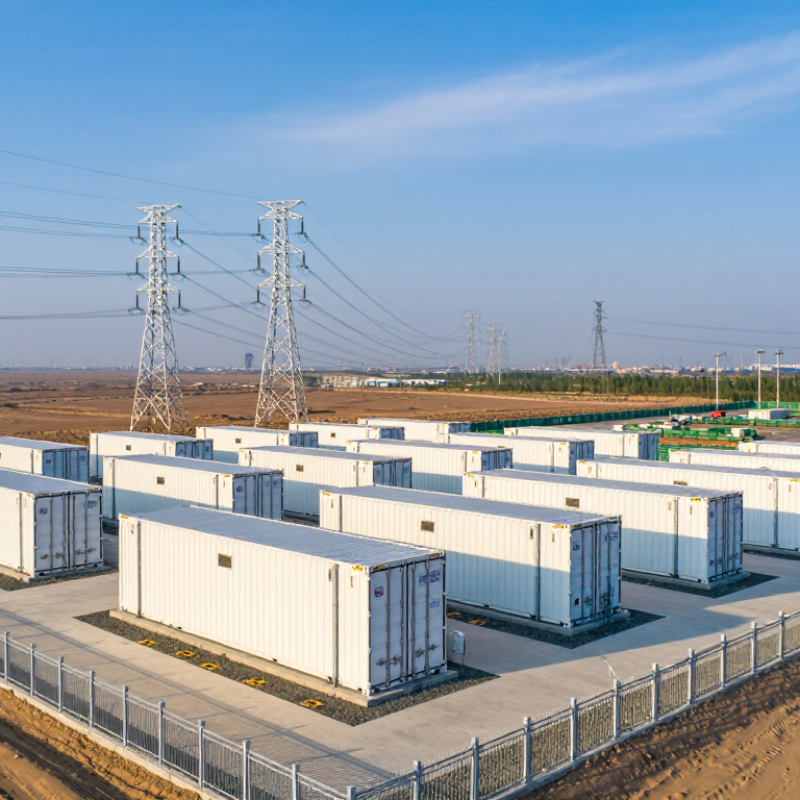
A China BESS is more than battery cells in a steel container. It combines lithium-ion modules, battery management, power conversion, thermal control, fire protection, and energy management software. The best systems also match local grid codes, project duration, and operating temperature. A two-hour system cannot replace a four-hour system during evening demand peaks.

Scale matters, but not alone. China’s National Energy Administration reported 31.39 GW of new-type energy storage capacity by the end of 2023. The International Energy Agency estimates that global energy storage must reach about 1,500 GW by 2030 for a net-zero pathway. These figures show why manufacturing scale, supply consistency, and quality control are essential. However, capacity figures can hide differences in usable energy, degradation, and response performance.

A serious evaluation should examine round-trip efficiency, cycle warranty, thermal uniformity, emergency shutdown time, and independent test records. A practical site check includes cable routing, container ventilation, sensor placement, and maintenance access. It should also verify software alarms before commissioning. No project is perfect. Some datasheets present laboratory efficiency, not year-round field results. The Energy Institute’s Statistical Review and IEA analyses support careful comparison of efficiency and operating conditions. In my experience, a slightly smaller system with clearer service procedures can outperform a larger system with uncertain support. Cost still matters, but the cheapest container may become expensive after repeated replacements.

How China’s BESS Technologies and System Designs Differ

What Is the Best China BESS Battery Energy Storage System?

How China’s BESS Technologies and System Designs Differ

China’s BESS strength comes from scale, integration, and fast manufacturing cycles. The International Energy Agency reported that China held about 80% of global battery cell manufacturing capacity in 2023. This advantage supports competitive pricing, rapid testing, and wider access to lithium iron phosphate cells. These cells favor thermal stability, long cycle life, and frequent daily operation.

System design still varies sharply. A two-hour container suits peak shaving and short renewable fluctuations. A four-hour system fits solar shifting, capacity support, and evening demand. China’s National Energy Administration reported 31.39 GW of new-type energy storage capacity by the end of 2023. However, reported capacity may include different technologies and operating conditions. Comparisons are not always clean.

Many Chinese projects use modular battery containers, liquid cooling, centralized energy management, and grid-forming functions. Some designs place power conversion equipment inside each container. Others use a shared conversion block for easier maintenance and lower equipment costs. The choice affects efficiency, fire isolation, expansion, and fault control.

Small details matter. Cable routing can influence maintenance time. Control software can decide whether stored energy earns revenue or remains idle. Field experience also shows that rated capacity does not guarantee usable capacity during heat, aging, or high power demand. That distinction is easy to miss.

No design wins everywhere. I may be too cautious, but procurement teams should test local grid rules, warranty assumptions, and real dispatch data before selecting a system. Industry figures help, yet site conditions remain decisive.

Which Performance Factors Determine the Best BESS Choice?

What Is the Best China BESS Battery Energy Storage System?

The best BESS choice depends on performance, not cabinet price. In practical project reviews, round-trip efficiency is the first checkpoint. A system rated at 90% efficiency loses 10 MWh after moving 100 MWh through storage. That loss affects revenue every day. The National Renewable Energy Laboratory’s 2024 Annual Technology Baseline places utility-scale battery efficiency commonly near 85%–95%, depending on system design and operating conditions.

Duration must match the application. A two-hour system may support frequency regulation, while four hours can better serve solar shifting. The International Energy Agency reported about 42 GW of new battery storage capacity in 2023, showing how quickly grid requirements are changing. Buyers should examine usable energy, not only nameplate capacity. Temperature control matters too. Heat around a container can accelerate degradation, increase auxiliary loads, and reduce available power.

Cycle life is easy to advertise, but harder to verify. Ask whether the figure applies at full depth of discharge, realistic temperatures, and a defined end-of-life capacity. Warranty terms should state annual degradation, response time, availability, and replacement responsibilities. Lazard’s 2024 Levelized Cost of Storage analysis shows that storage economics vary widely with duration, utilization, and financing assumptions. The lowest quoted cost can therefore mislead. I would also test software alarms, data access, and emergency procedures before signing. Small details fail first. Performance promises need independent validation.

How to Compare Chinese BESS Manufacturers and Suppliers

Comparing Chinese BESS manufacturers requires more than checking battery capacity or price. In project reviews, I examine cell chemistry, thermal management, battery management systems, and power conversion equipment. Ask for measured round-trip efficiency, degradation data, response time, and usable energy at the point of connection. Marketing figures can look impressive. Real operating conditions matter more.

Supplier reliability also depends on manufacturing discipline. Request factory audit records, production traceability, quality-control procedures, and independent test reports. Verify compliance with relevant international safety and grid requirements for your target market. Study the warranty carefully. It should define capacity retention, operating temperature, cycling limits, response duties, and replacement procedures. A ten-year warranty means little if exclusions are broad or support is distant. I have seen low-cost proposals become expensive after unclear commissioning responsibilities. That risk deserves honest attention.

Tips: Compare at least three suppliers using the same technical specification. Ask for a complete bill of materials and a sample monitoring dashboard. Check spare-parts availability, remote support hours, technician response times, and local service capability. Visit the factory when possible, but do not treat a polished showroom as proof of field performance. Speak with operating customers and request evidence from similar climates. Also assess software ownership, data access, cybersecurity controls, and system integration experience. Some suppliers communicate confidently yet provide weak documentation. That is a warning, not a minor inconvenience.

What Is the Best China BESS Battery Energy Storage System? - How to Compare Chinese BESS Manufacturers and Suppliers

Evaluation Dimension Typical Reference Range or Requirement What to Compare Among Suppliers Why It Matters Verification Evidence
Battery Chemistry Lithium iron phosphate (LFP) is the most common chemistry for stationary BESS because of its thermal stability and cycle life. Cell manufacturer, cell format, chemistry consistency, and documented abuse-test results. Chemistry affects safety, usable capacity, operating temperature, and long-term degradation. Cell datasheets, batch records, factory quality-control procedures, and test reports.
System Capacity Commercial systems commonly range from approximately 100 kWh to more than 10 MWh per project, depending on application. Rated energy, usable energy, expansion method, container configuration, and site footprint. The usable capacity determines how much energy can be shifted, reserved, or traded. Guaranteed-capacity curve, single-line diagram, configuration list, and acceptance-test procedure.
Power Rating and C-Rate A 0.5C configuration is commonly used for two-hour systems; 1C supports approximately one hour of rated discharge. Continuous and peak power, charge/discharge duration, overload capability, and power-factor range. The power rating affects frequency regulation, peak shaving, backup response, and grid services. PCS datasheet, power-performance test, and grid-code compliance report.
Round-Trip Efficiency Approximately 85%–92% at the system level is a common target, depending on load, temperature, and auxiliary consumption. Whether efficiency includes HVAC, transformers, auxiliary loads, standby losses, and the defined operating point. Higher efficiency reduces energy losses and improves project revenue or savings. Independent performance test using a clearly defined measurement boundary.
Cycle Life and Degradation Many LFP cell specifications state several thousand cycles under controlled conditions; actual life depends on depth of discharge, temperature, and C-rate. End-of-life capacity threshold, annual degradation assumption, depth-of-discharge limits, and throughput warranty. Degradation directly affects lifetime revenue, replacement planning, and levelized storage cost. Warranty schedule, accelerated-aging data, cycle-test conditions, and degradation model.
Safety Architecture A complete design normally includes cell monitoring, module protection, rack isolation, smoke and temperature detection, thermal management, and fire suppression. Detection speed, gas detection, emergency shutdown, pressure relief, fire suppression, and propagation control. Safety design reduces the probability and consequences of thermal events. System risk assessment, fire-test reports, emergency-response plan, and installation manual.
Applicable Standards and Certifications Common references include IEC 62619, IEC 63056, UN 38.3, UL 9540A, NFPA 855, GB/T 36276, GB/T 34131, and relevant grid codes. Whether certification applies to the exact model, complete system, destination market, and current hardware revision. Compliance supports market access, permitting, insurance, and project-bankability requirements. Certificate number, scope, testing laboratory, issue date, and model identification.
Ingress Protection and Environment Outdoor enclosures are commonly specified at IP54 or higher; exact requirements depend on dust, rain, salt, and site conditions. IP rating, corrosion protection, altitude limit, humidity range, operating temperature, and HVAC strategy. Environmental suitability influences availability, maintenance, and enclosure life. Environmental test reports, enclosure drawings, derating curves, and site-specific design review.
Battery Management System A robust BMS should provide cell-level voltage and temperature monitoring, balancing, fault logging, isolation, and multi-level protection. Sampling accuracy, communication protocols, remote diagnostics, firmware control, and data retention. BMS quality affects safety, available capacity, fault response, and serviceability. BMS functional specification, alarm matrix, communication map, and cybersecurity documentation.
Power Conversion System The PCS should support the required AC voltage, frequency, reactive-power control, islanding protection, and grid-forming or grid-following operation where applicable. Efficiency curve, response time, harmonic distortion, overload rating, black start, and grid-code functions. PCS performance determines grid compatibility and the system's ability to deliver contracted services. Type-test report, grid compliance certificate, control-function test, and commissioning records.
Warranty and Performance Guarantee Commercial warranties are often structured around a calendar period, minimum retained capacity, operating limits, and cumulative energy throughput. Warranty duration, retained-capacity curve, response time for claims, exclusions, liquidated damages, and credit support. A clear warranty reduces financial exposure when actual degradation or availability differs from the model. Signed warranty, service-level agreement, spare-parts policy, and performance-guarantee test method.
Availability and Maintainability Project specifications commonly set annual availability targets around 98%–99%, subject to agreed exclusions and measurement rules. Planned-maintenance hours, mean time to repair, remote monitoring, spare-parts stock, and local service coverage. Higher availability increases dispatch opportunities and reduces lost operating revenue. Availability calculation, service-level agreement, maintenance schedule, and incident-response records.
Energy Management System The EMS should support scheduling, peak shaving, renewable smoothing, demand response, tariff optimization, alarms, and reporting. API availability, SCADA integration, open protocols, role-based access, data ownership, and software update policy. Software flexibility determines whether the BESS can adapt to changing tariffs and grid-service requirements. Interface list, protocol documentation, cybersecurity assessment, and functional demonstration.
Manufacturing Quality A reliable production process should include incoming-cell inspection, traceability, automated assembly controls, end-of-line testing, and documented corrective action. Quality-management certification, production capacity, process capability, defect rates, and batch traceability. Consistent manufacturing reduces field failures and performance variation between shipments. Factory audit, quality manual, sample test records, traceability report, and acceptance inspection.
Supply Chain and Delivery Lead time varies with cell availability, customization, certification, shipping route, and project size; it must be confirmed contractually. Bill of materials, cell-origin disclosure, production slots, Incoterms, logistics plan, and change-control process. Predictable delivery lowers construction delays and limits exposure to component substitutions. Manufacturing schedule, approved-vendor list, shipment plan, and contractual delivery milestones.
Total Cost of Ownership Evaluation should include equipment price, shipping, installation, commissioning, software, augmentation, maintenance, insurance, and end-of-life costs. Cost per usable kWh, cost per delivered MWh, degradation cost, auxiliary consumption, and replacement assumptions. The lowest purchase price is not necessarily the lowest lifetime cost. Twenty-year financial model, itemized quotation, assumptions register, and sensitivity analysis.
After-Sales Support A project-ready supplier should provide commissioning support, training, remote diagnostics, spare parts, and defined escalation channels. Local technicians, response time, training scope, spare-parts location, remote-access policy, and long-term support commitment. Effective support reduces downtime and simplifies operation after installation. Service network map, support agreement, training plan, escalation matrix, and reference-project interviews.

Comparison principle: The best BESS is the system that meets the required safety, performance, compliance, availability, service, and lifetime-cost targets for the specific project—not necessarily the system with the lowest initial price.

How to Select, Deploy, and Maintain the Right China BESS System

A reliable China BESS battery energy storage system starts with the site, not the product brochure. Measure daily load, peak demand, solar output, and available connection capacity. Lithium iron phosphate cells are commonly selected for stationary projects because they offer strong thermal stability. Still, chemistry alone does not guarantee safety. Check usable energy, round-trip efficiency, degradation assumptions, and promised end-of-life capacity. Request independent test records, traceable cell data, relevant certifications, and clear warranty conditions. A low purchase price can hide expensive integration work. Not always.

During deployment, place containers on a level, drained foundation with service access on every side. Confirm fire detection, ventilation, emergency shutdown, insulation monitoring, and remote alarms before energizing the system. The energy management system must match the inverter, meter, protection settings, and local grid requirements. Commissioning should include charge and discharge tests under realistic loads, not only a brief factory demonstration. Record temperatures, voltages, alarm responses, and software versions. Small omissions become large problems.

Maintenance needs a written schedule. Inspect filters, cables, terminals, cooling equipment, and enclosure seals at defined intervals. Review state-of-charge trends and cell voltage differences through the monitoring portal. Keep spare sensors and communication components available, especially at remote sites. I would also require a clear response time for technical support. Models can drift. Projected lifetime often depends on cycling patterns that change after installation. Recalculate performance each year, and revise operating limits when field data disagrees with the original model.

What Is the Best China BESS Battery Energy Storage System?

China's new energy storage market has expanded rapidly, making system selection dependent on project duration, safety, efficiency, grid requirements, deployment conditions, and long-term maintenance capability.

Cumulative installed power capacity of China's new energy storage systems, including electrochemical storage, at year-end. Figures are reported in gigawatts (GW). Source: National Energy Administration of China and publicly reported national energy-storage statistics.