Why Are Artificial Lift Technologies Essential for Oil Production?
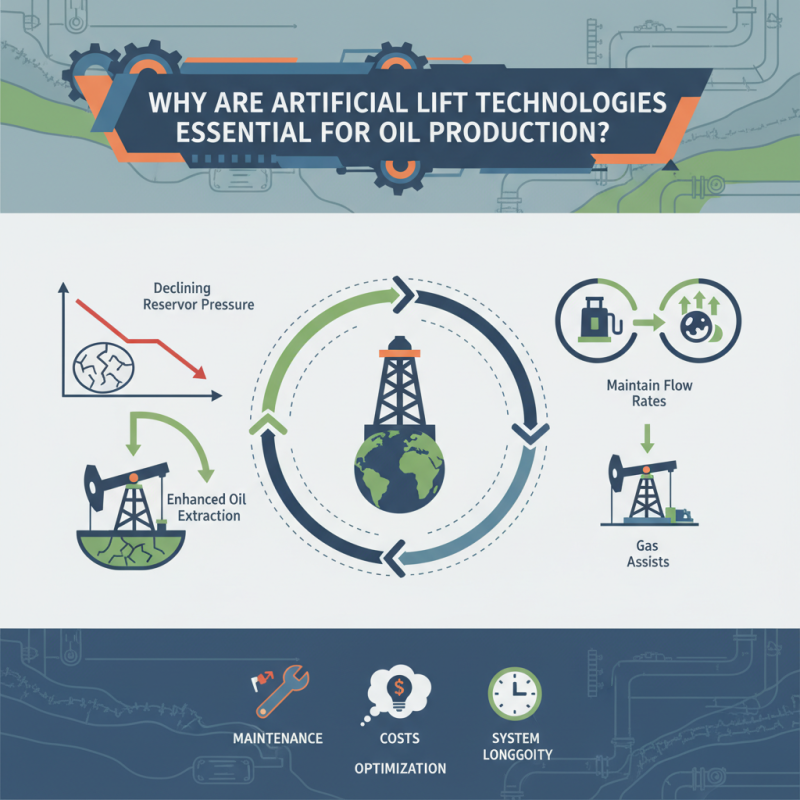
In the oil industry, production efficiency is crucial. Artificial Lift Technologies play a vital role in enhancing oil extraction. These technologies counteract natural reservoir pressure declines. When pressures drop, oil production can significantly decline.
Using various methods, such as pumps or gas assists, artificial lift helps to maintain flow rates. Many wells rely on these systems to remain productive. The choice of technology often depends on specific well conditions. For instance, rod pumps work well in many scenarios. Yet, they may struggle in deeper or unconventional wells.
Despite their importance, implementing these technologies can be complex. Engineers must consider costs, maintenance, and the longevity of systems. Sometimes, outdated technologies are still in use, leading to suboptimal results. Reflecting on these challenges can lead to better choices in the future. In the competitive landscape of oil production, optimizing artificial lift choices is essential.
Introduction to Artificial Lift Technologies in Oil Production
Artificial lift technologies play a pivotal role in enhancing oil production efficiency. These methods are not just optional; they are essential in many cases. Reports indicate that around 90% of oil wells in the U.S. utilize some form of artificial lift. This statistic highlights its critical importance in the industry.
There are several methods of artificial lift, including pump jacks, gas lift, and electric submersible pumps. Each method has its own advantages and limitations. For instance, while pump jacks are widely used, they may become less efficient in deeper wells. A study showed that nearly 20% of wells using this method underperformed, leading to increased operational costs.
However, advancements in technology are improving these systems. Despite this, challenges remain. For example, the complexity of installation and maintenance can deter some operators. Reports suggest that failure rates can be as high as 15% in poorly managed installations. These setbacks emphasize the need for ongoing optimization and training to ensure maximum output from Artificial Lift Systems.
Overview of Oil Production Challenges That Require Artificial Lift
Artificial lift technologies play a crucial role in oil production. Many oil reservoirs face challenges like declining pressure and fluid flow issues. These factors can significantly affect production rates.
Tips: Monitor reservoir pressure regularly. It helps in timely interventions. Often, operators delay adjustments, leading to lost output.
Without proper lift methods, oil extraction becomes inefficient. Gravity and fluid properties change over time. This unpredictability can make or break a project’s success. Operators need to stay on top of technological advancements to adapt.
Tips: Invest in training for staff. Knowledgeable teams can troubleshoot faster. Avoiding reliance on outdated techniques ensures continuous improvement.
Addressing these challenges with artificial lift technologies optimizes production. Yet, selecting the right system requires careful evaluation. Each well has unique characteristics, making it essential to customize solutions.
Oil Production Challenges and Artificial Lift Technologies
This chart illustrates the impact level of various challenges faced in oil production that necessitate the use of artificial lift technologies. Each challenge is rated on a scale of 1 to 10, indicating its significance in the overall production process.
Types of Artificial Lift Systems and Their Working Mechanisms
Artificial lift systems play a crucial role in boosting oil production from wells. These technologies help extract hydrocarbons more efficiently when natural pressure declines. According to the Society of Petroleum Engineers, over 90% of oil wells use some form of artificial lift by the end of primary production.
There are several types of artificial lift systems. The most common types include rod pumps, electrical submersible pumps (ESPs), and gas lift systems.
Rod pumps are suitable for lower production rates. They mechanically lift oil to the surface, but they can struggle with high-viscosity fluids. ESPs, on the other hand, are more versatile. They can handle higher volumes at various depths but require more power.
Gas lifts use injected gas to enhance oil flow but depend on reservoir conditions.
The choice of system can be complex. Industry reports indicate that improper selection can lead to increased operational costs and reduced efficiency. For instance, a poorly configured gas lift might result in a production decline of 30% or more. Continuous monitoring is essential to optimize performance and minimize downtime. Each system presents unique challenges and advantages that must be weighed carefully.
Benefits of Implementing Artificial Lift Technologies in Oil Fields
Artificial lift technologies play a vital role in enhancing oil production. According to a report by the International Petroleum Industry Environmental Conservation Association (IPIECA), these methods can increase oil recovery rates by up to 60%. This is especially important as conventional wells often face production declines as reservoir pressure diminishes.
Implementing artificial lift systems, such as gas lift or electric submersible pumps, can optimize output. They can significantly reduce downtime and operational costs, ultimately improving profitability. However, the initial investment can be substantial, and not all fields see the expected return. An estimated 30% of projects face performance issues due to improper technology selection.
The benefits of artificial lift go beyond mere recovery. Enhanced production allows for better resource management. It can also contribute to extended field life. However, companies must regularly assess performance data to refine strategies. Data from the Society of Petroleum Engineers indicates that 40% of artificial lift installations require adjustments within the first year. This highlights the need for ongoing analysis and adaptation in technology deployment.
Future Trends and Innovations in Artificial Lift Technologies
The oil industry is undergoing rapid transformation. Innovations in artificial lift technologies are at the forefront of this shift. These technologies enhance oil recovery, especially in mature fields. They extend the life of wells, making them more productive. New approaches, such as gas lift and electric submersible pumps, are gaining attention. They improve efficiency and reduce operational costs.
In the future, we may see advancements in automation. Smart systems could optimize lift performance in real-time. Machine learning algorithms might predict equipment failures before they happen. However, reliance on technology also comes with challenges. Understanding these systems requires skilled personnel. Not all operators are prepared for this shift.
Environmental concerns are pushing the industry toward greener alternatives. Companies are exploring low-energy lifting methods. The integration of solar or wind energy is a possibility. Yet, not all innovations will succeed. Experimentation is essential, but it can be costly. Companies must be willing to learn from failures. Embracing new ideas is vital for progress, but it’s a risky venture.
Why Are Artificial Lift Technologies Essential for Oil Production? - Future Trends and Innovations in Artificial Lift Technologies
| Dimension | Description | Current Trends | Future Innovations |
| Primary Technologies | Technologies used to lift fluids from wells. | Progressive Cavity Pumps, Rod Lift Systems | Electrical Submersible Pumps with IoT integration |
| Efficiency Metrics | Measures of productivity and operational efficiency. | Increased production rates by 20% | Smart sensors for real-time monitoring |
| Key Challenges | Obstacles faced in oil production using artificial lift. | High operational costs | Advanced predictive maintenance technologies |
| Market Growth | Trends in demand and supply of artificial lift technologies. | Growing demand in emerging markets | Sustainable technologies gaining traction |
| Regulatory Impact | Influence of regulations on the deployment of technologies. | Stricter environmental regulations | Incorporation of eco-friendly practices |