Your Source for Trays!

What Is an Aluminium Melting Pot and How Does It Work?

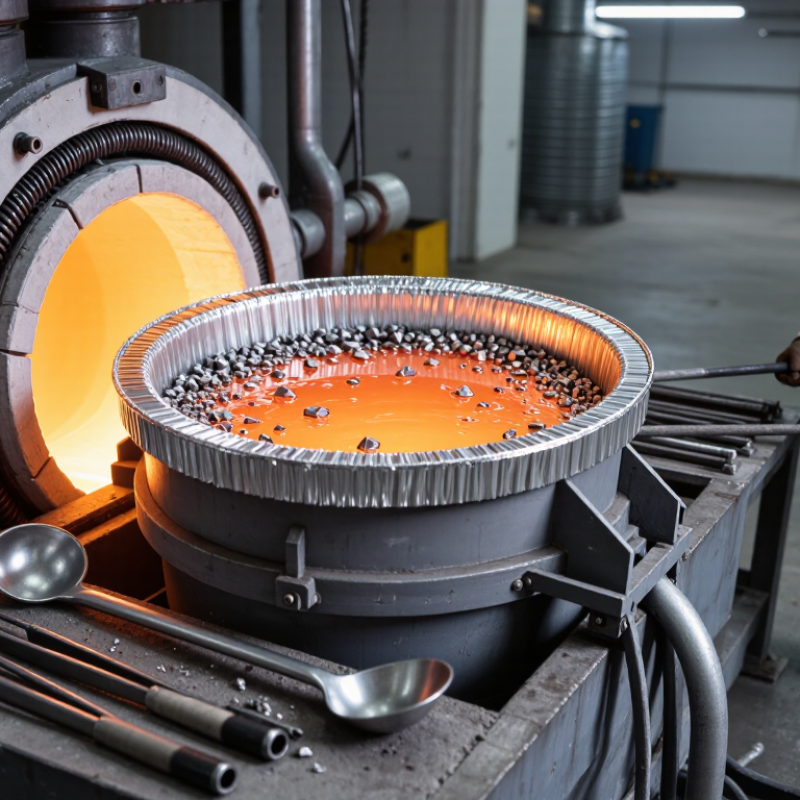
An aluminium melting pot is a heat-resistant vessel used to melt aluminium before casting, recycling, or manufacturing. It works inside a furnace, where controlled heat raises the metal above its melting point, approximately 660°C. The pot holds the liquid metal while limiting contamination and heat loss.

In practical foundry work, operators often use graphite, silicon carbide, or specially rated steel crucibles. Each material behaves differently. A furnace heats the pot through gas, electricity, or induction. The pot then transfers heat into aluminium pieces placed inside it. As the metal melts, solid fragments collapse into a bright, reflective pool. Surface oxides and unwanted debris may collect above the liquid metal. Skilled operators remove them carefully before pouring.

Small details matter. A cracked pot can fail suddenly. Moisture can also create dangerous steam when it contacts molten aluminium. For this reason, trained users inspect the vessel, keep tools completely dry, and wear suitable protective equipment. Good ventilation is equally important. Temperature control improves consistency, but it does not guarantee perfect castings. Alloy composition, furnace design, pouring speed, and mould condition also influence the final result. This is where simple explanations become incomplete.

Understanding how an aluminium melting pot works helps readers judge equipment more realistically. It is not merely a container. It is part of a controlled thermal system requiring experience, maintenance, and careful measurement. Real workshops may use different methods. The safest choice depends on the alloy, batch size, operating temperature, and manufacturer’s instructions.

What Is an Aluminium Melting Pot and How Does It Work?

Definition and Basic Structure of an Aluminium Melting Pot

An aluminium melting pot is a heat-resistant vessel used to contain aluminium while it changes from solid metal into liquid. It is not simply a metal bucket. The pot normally includes a strong outer shell, a refractory lining, insulation, and a protected opening. The inner lining holds the molten aluminium and reduces heat loss. It also helps prevent the shell from softening under intense heat.

The basic structure often includes a crucible, a lid, heating elements, and temperature-monitoring equipment. Some designs use gas burners, while others use electric heating elements around the pot. A thermocouple measures the internal temperature, although readings can vary near the surface. The lid helps retain heat and limits contact with dust, moisture, and air. A pouring spout, lifting point, or tilting frame may be added for controlled transfer.

During operation, solid aluminium is placed inside the heated crucible. Heat passes through the vessel wall and raises the metal temperature gradually. Once the aluminium becomes fully liquid, the operator checks its condition before pouring. Oxide film may form on the surface. It should not be mixed carelessly into the melt. In practical workshops, insulation quality, lining wear, and temperature calibration strongly affect performance. Small details matter. A damaged lining can create uneven heating, and an overlooked temperature error may produce inconsistent castings. The ideal structure is clear, but real equipment needs regular inspection and cautious adjustment.

Materials, Heat Sources, and Temperature Control

An aluminium melting pot is a heat-resistant vessel designed to liquefy aluminium for casting. Its performance depends heavily on material choice. Dense graphite, silicon carbide, and suitable ceramic composites can tolerate repeated heating and cooling. Ordinary steel may survive briefly, but it can scale, distort, or contaminate the melt.

The heat source also changes the process. Gas burners provide strong, adjustable heat and suit many workshop operations. Electric elements offer cleaner, steadier heating, while induction systems transfer energy rapidly through the metal. Aluminium melts at about 660°C, but the pot usually needs a higher working temperature. Many casting operations use roughly 700–760°C, depending on the alloy and mould design. Too much heat increases oxidation and may damage the pot.

Temperature control requires more than watching the colour of the metal. Aluminium does not glow clearly at its melting point. A calibrated probe or infrared instrument gives better evidence, although reflective surfaces can mislead infrared readings. Keep the lid fitted when practical. Preheat the pot and tools thoroughly. Moisture can cause dangerous splashing.

Small temperature changes matter. Still, exact control is not always possible in a basic workshop. This is where careful records help. Note heating time, measured temperature, surface condition, and casting results. I would not trust a single reading. Check the instrument regularly, because a wrong number can create false confidence. Keep the melt clean, remove visible dross gently, and avoid overheating when the aluminium is already fluid.

How Aluminium Is Loaded, Melted, and Stirred

An aluminium melting pot is a heat-resistant vessel used to transform solid aluminium into a controlled liquid. Operators load clean ingots, sorted scrap, or returns into the pot. The charge should be dry and free from oil, paint, and trapped moisture. Moisture can flash into steam and cause dangerous metal splashing.

The furnace raises the pot temperature above aluminium’s melting point, about 660°C. Heat moves through the vessel wall and into the metal. Larger pieces melt slowly, while smaller pieces disappear faster. Operators add material gradually to avoid sudden temperature drops.

Once molten, the surface may hold oxides and impurities. A skimmer removes this layer before casting. Gentle stirring improves temperature consistency and helps distribute alloying elements. Mechanical paddles or electromagnetic systems can create this movement. Excessive stirring is not always better. It may pull oxides into the melt and reduce quality.

The International Aluminium Institute reports that recycled aluminium requires about 95% less energy than primary production, making controlled remelting valuable.

Tips: Preheat tools before contact. Keep the charge dry. Use a calibrated thermometer, not colour alone. Record melt temperature, holding time, and scrap type. These simple records reveal process drift. In practice, operators sometimes overheat the bath for convenience. That choice wastes energy and can increase oxidation. Better control takes patience.

Pouring, Casting, and Safe Handling Procedures

What Is an Aluminium Melting Pot and How Does It Work?

An aluminium melting pot is a heat-resistant vessel used to liquefy aluminium for casting. Aluminium melts at about 660°C, so the pot must tolerate intense heat without cracking or reacting with the metal. Heat travels through the pot walls, turning solid pieces into a bright, fluid pool. A clean surface matters. Oil, paint, and unknown coatings can produce smoke or weaken the final casting.

Pouring requires more control than strength. The operator should grip the pot with suitable tongs and keep both hands steady. Move along a clear, dry route. Pour in one smooth stream, close to the mold opening, without splashing or overfilling. The mold must be completely dry and firmly supported. Even a small amount of trapped moisture can create dangerous steam. Casting is not always neat. Metal may cool early, the mold may shift, or the surface may fill unevenly. That is when stopping and checking becomes wiser than forcing the pour.

Tips: Preheat metal tools and molds carefully, but never rush this step. Wear a face shield, heat-resistant gloves, protective clothing, and sturdy footwear. Keep water, damp sand, and loose materials away from the work area. Maintain ventilation and inspect the pot for cracks before each use. Do not handle dross casually; it may remain dangerously hot inside. Practice with an empty, controlled movement first. That small rehearsal can prevent a large mistake.

Common Types, Applications, and Maintenance Requirements

What Is an Aluminium Melting Pot and How Does It Work?

An aluminium melting pot is a heat-resistant vessel used to liquefy aluminium for casting or recycling. Aluminium melts at about 660°C, although the pot and furnace require higher temperatures. Heat passes through the pot wall, while an operator monitors temperature and removes surface dross. Common designs include fixed crucible pots, tilting pots, and electric or gas-heated furnaces. Graphite, silicon carbide, and suitable refractory materials are often selected for their heat resistance and chemical stability.

Each type serves a different working environment. Small crucible pots suit repair shops, training rooms, and occasional casting. Tilting pots help transfer molten metal into moulds with better control. Larger furnaces support regular production and clean scrap processing. Applications include machine components, decorative castings, prototypes, and aluminium recovery. The correct capacity matters. An oversized pot wastes energy and increases handling risks.

Maintenance begins before heating. Operators should inspect the pot for cracks, thinning walls, and trapped moisture. Even a small crack deserves attention. Clean dross regularly, but avoid aggressive tools that damage the lining. Keep the exterior dry and check heating elements, burners, thermocouples, and insulation. Allow gradual heating and cooling to reduce thermal shock. In practice, maintenance schedules are rarely followed perfectly, which is a weakness worth correcting. Temperature records, inspection logs, ventilation checks, and suitable protective equipment improve reliability. A qualified technician should assess damaged vessels before reuse.

What Is an Aluminium Melting Pot and How Does It Work? - Common Types, Applications, and Maintenance Requirements
Data Dimension Type or Feature Typical Specification or Factual Data How It Works or Where It Is Used Maintenance Requirements
Basic Definition Aluminium melting pot A heat-resistant vessel used to contain and melt aluminium or aluminium alloys. Heat is transferred from an electric heating element, gas burner, induction coil, or external furnace into the metal charge. Inspect the vessel, lining, heating system, and temperature controls before every operating cycle.
Material Property Pure aluminium melting point Approximately 660.3°C (1,220.5°F). The operating temperature must be above the melting point to create a fully liquid bath. Avoid excessive overheating because it increases oxidation, dross formation, energy use, and crucible wear.
Operating Temperature Typical molten aluminium temperature Commonly about 680–800°C (1,256–1,472°F), depending on alloy, process, and pouring requirements. Lower temperatures reduce oxidation; higher temperatures may improve fluidity but can increase metal loss and equipment damage. Verify temperature with a calibrated thermocouple or immersion pyrometer rather than relying only on the controller display.
Common Type Electric resistance melting pot Uses resistance heating elements surrounding or beneath the crucible; often available in small and medium capacities. Suitable for workshops, laboratories, maintenance departments, and small-batch casting because temperature control is relatively precise. Keep heating elements dry and free from metal splash; check insulation, wiring, terminals, and temperature sensors regularly.
Common Type Gas-fired melting pot Uses propane or natural gas burners with a refractory-lined chamber; commonly selected for portable or higher-throughput melting. Combustion gases heat the crucible and surrounding refractory lining. It can provide rapid heating and flexible fuel operation. Inspect burners, gas hoses, regulators, combustion air openings, refractory lining, and exhaust paths for damage or blockage.
Common Type Induction melting pot or furnace Uses an alternating electromagnetic field to induce electric currents in the metal charge; usually applied to controlled production melting. Provides rapid, uniform heating and can reduce direct flame contamination. The system requires suitable electrical power and cooling. Check the induction coil, cooling-water flow, electrical interlocks, insulation, and refractory condition according to the equipment schedule.
Crucible Material Graphite or clay-graphite crucible Offers good thermal-shock resistance and is widely used for non-ferrous metal melting. Common in small foundries and casting operations where removable crucibles are heated externally. Preheat gradually, keep dry, avoid sudden temperature changes, and replace the crucible when cracks, severe erosion, or wall thinning appear.
Crucible Material Silicon-carbide crucible Provides high thermal conductivity, good thermal-shock resistance, and strong resistance to many foundry conditions. Used for repeated melting cycles and applications requiring efficient heat transfer and durable service. Prevent mechanical impact, avoid prolonged empty overheating, and inspect for oxidation, cracks, distortion, and excessive wear.
Crucible Material Cast-iron or steel pot Strong and comparatively economical, but iron contamination and oxidation must be considered. May be used for selected aluminium applications when material compatibility and contamination limits are acceptable. Maintain a clean protective coating where appropriate; remove rust and inspect for thinning, scaling, cracks, and metal penetration.
Capacity Small laboratory or hobby pot Often designed for a few kilograms of aluminium, depending on crucible geometry and heater rating. Used for demonstrations, prototyping, repair work, and small castings. Do not exceed the rated charge weight. Confirm that tongs, lifting tools, and the support stand are suitable for the total load.
Capacity Workshop or production pot Capacity ranges from several kilograms to hundreds of kilograms, depending on furnace design and handling equipment. Used for batch casting, machine-shop recycling, component production, and process development. Record cycle counts, monitor lining wear, inspect lifting points, and service burners, elements, controls, or coils on a planned schedule.
Melting Process Charging the pot Clean, dry aluminium charge is placed into the pot without exceeding the manufacturer’s recommended fill level. Dry charge materials reduce the risk of violent reactions caused by moisture contacting molten metal. Store scrap under dry conditions and remove sealed, wet, or contaminated items before charging.
Melting Process Heat transfer and liquefaction Heat raises the charge to its melting range, after which solid aluminium becomes a liquid metal bath. Convection within the liquid metal helps equalize temperature, while the furnace system maintains the required holding temperature. Prevent cold spots by using proper loading practices and avoid unnecessary stirring that can entrain oxides and gas.
Metal Treatment Dross removal Dross is a mixture of aluminium oxide and entrained metal formed mainly at the molten surface. A skimming tool removes dross before transfer or pouring, improving metal cleanliness and reducing inclusions. Skim gently with clean, dry tools; do not use wet tools or return heavily oxidized dross to the melt without an appropriate recovery process.
Metal Transfer Pouring or ladling Molten aluminium is transferred using a suitable preheated ladle, tilt mechanism, or controlled furnace outlet. The transfer method should minimize turbulence, splashing, and air entrainment during casting. Inspect ladles, handles, pouring lips, refractory coatings, and lifting devices before use; keep all contact tools completely dry.
Safety Feature Temperature control and over-temperature protection Industrial systems commonly use thermocouples, controllers, alarms, and independent high-limit protection. These components maintain the target temperature and help prevent overheating of the metal, crucible, or furnace structure. Calibrate sensors periodically and test alarms, emergency shutoffs, and control-panel functions according to the maintenance plan.
Safety Requirement Moisture prevention Water can rapidly vaporize when it contacts molten aluminium and may cause a dangerous metal splash or explosion-like eruption. Dry charge materials, tools, crucibles, molds, and work areas are essential for safe operation. Keep the furnace area dry, store materials off the floor, and preheat moisture-sensitive tools and molds using approved procedures.
Routine Maintenance Daily or pre-use inspection Check the crucible or lining, frame, controls, cables, fuel system, ventilation, and emergency equipment. Early detection of damage reduces the risk of leakage, fire, electrical faults, and unplanned downtime. Document inspection results and remove damaged equipment from service until it has been evaluated and repaired.
Routine Maintenance Cleaning and dross management Remove accumulated dross, spilled metal, dust, and refractory debris from accessible areas after the equipment has cooled safely. Clean surfaces improve heat transfer, reduce contamination, and make cracks or leaks easier to identify. Use tools and cleaning methods approved for the furnace material; never add water to hot metal or hot refractory.
Replacement Indicator Crucible or lining deterioration Warning signs include cracks, bulging, severe erosion, metal penetration, distortion, flaking, or unusual wall thinning. Continued operation with a damaged vessel can lead to molten-metal leakage and structural failure. Replace the crucible or repair the lining before the damage reaches a critical condition; follow the supplier’s service-life guidance.
Energy and Process Control Heat-up and holding efficiency Efficient insulation, correct burner adjustment, closed furnace covers, and appropriate holding temperatures reduce energy consumption. The pot should melt the required charge efficiently without maintaining an unnecessarily high temperature for extended periods. Inspect insulation and covers, remove excessive buildup, and review heating time, temperature, and fuel or electricity records.

Article Source: